

What Is a Meta Search Engine?
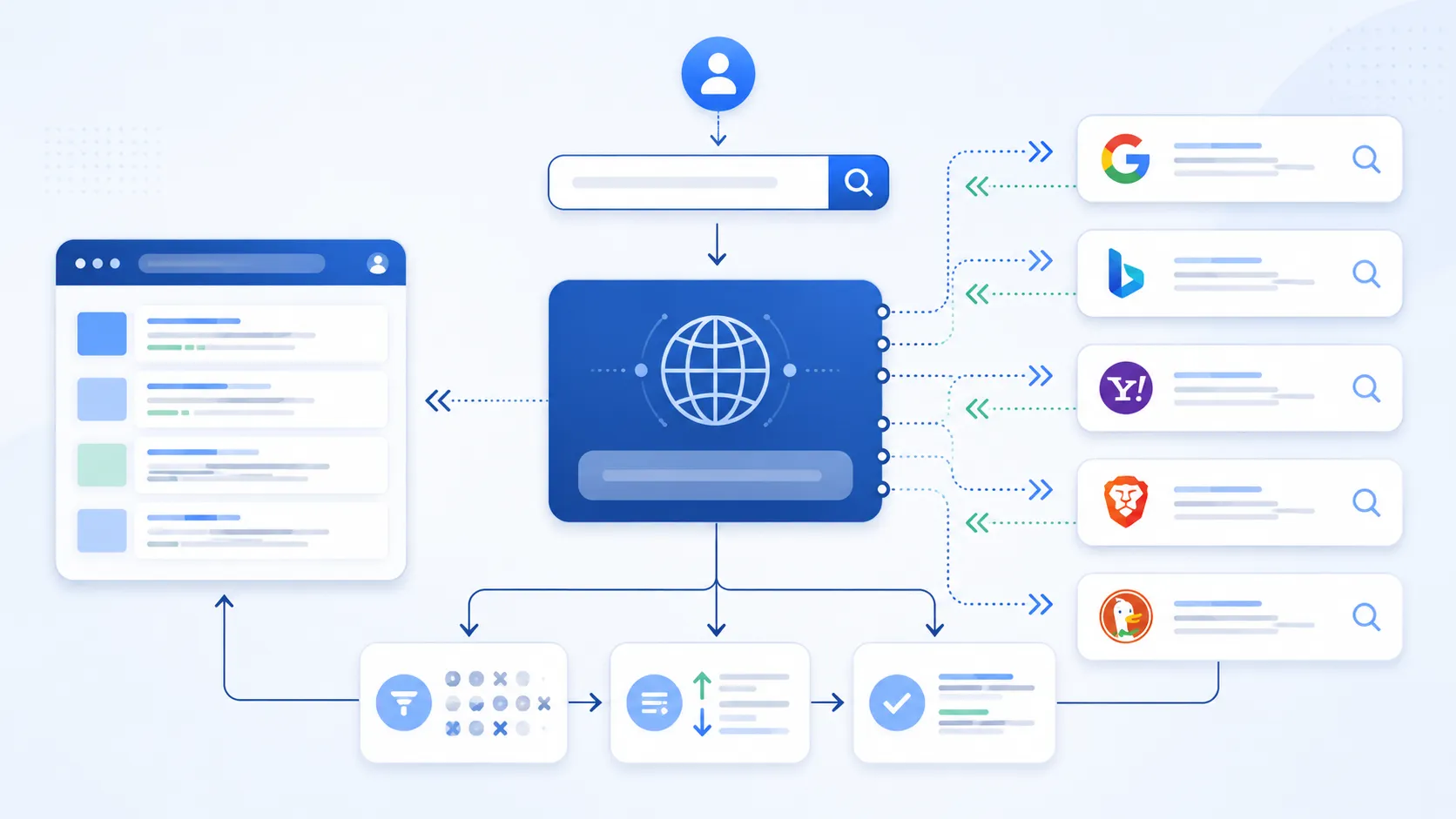
Imagine asking five different experts the same question instead of relying on just one. A meta search engine works in a similar way. Rather than maintaining its own massive database of indexed web pages, it sends your search query to multiple search engines simultaneously, collects their responses, removes duplicate results, ranks them, and presents a unified list.
Traditional search engines such as Google or Bing build and maintain enormous indexes by continuously crawling billions of web pages. A meta search engine takes a different approach—it depends on other search engines to retrieve information, making it a powerful tool for users who want broader coverage, greater privacy, or a second opinion beyond a single search provider.
In 2026, this concept has become even more relevant. The rise of AI-generated answers, personalized search experiences, and privacy concerns means users increasingly seek multiple perspectives instead of relying on one platform's ranking algorithm. Researchers compare sources, developers verify technical documentation, marketers analyze search visibility, and privacy-conscious users reduce dependence on a single search ecosystem.
Whether you're researching a business strategy, debugging code, planning travel, or comparing products, understanding how meta search engines work helps you choose the right tool for the task.
Why This Topic Matters in 2026
Search has changed dramatically over the last few years.
Today, many search platforms personalize results based on your location, search history, browsing behavior, and even your device. While personalization often improves convenience, it can also create information bias, making it harder to discover alternative viewpoints or less popular resources.
At the same time, AI-powered search assistants summarize information instead of simply listing websites. While these summaries save time, they may overlook niche sources or reduce transparency about where information originates.
Meta search engines address these challenges by aggregating results from multiple providers. They don't replace Google or AI assistants, but they offer a valuable alternative when you need broader coverage, better privacy, or more diverse search results.
Example
Suppose you're searching for:
Best CRM software for manufacturing companies
- Google may prioritize sponsored content, established review websites, or results influenced by your browsing history.
- A meta search engine can combine results from several search providers, exposing additional reviews, industry forums, comparison sites, and niche recommendations that might otherwise remain hidden.
For professionals making purchasing decisions, this broader perspective can lead to better-informed choices.
Quick Definition
A meta search engine is a search platform that retrieves results from multiple search engines instead of maintaining its own web index. It combines, filters, removes duplicates, and ranks those results to provide users with a single, consolidated search experience.
How Is a Meta Search Engine Different from a Traditional Search Engine?
The key distinction lies in where the search results come from.
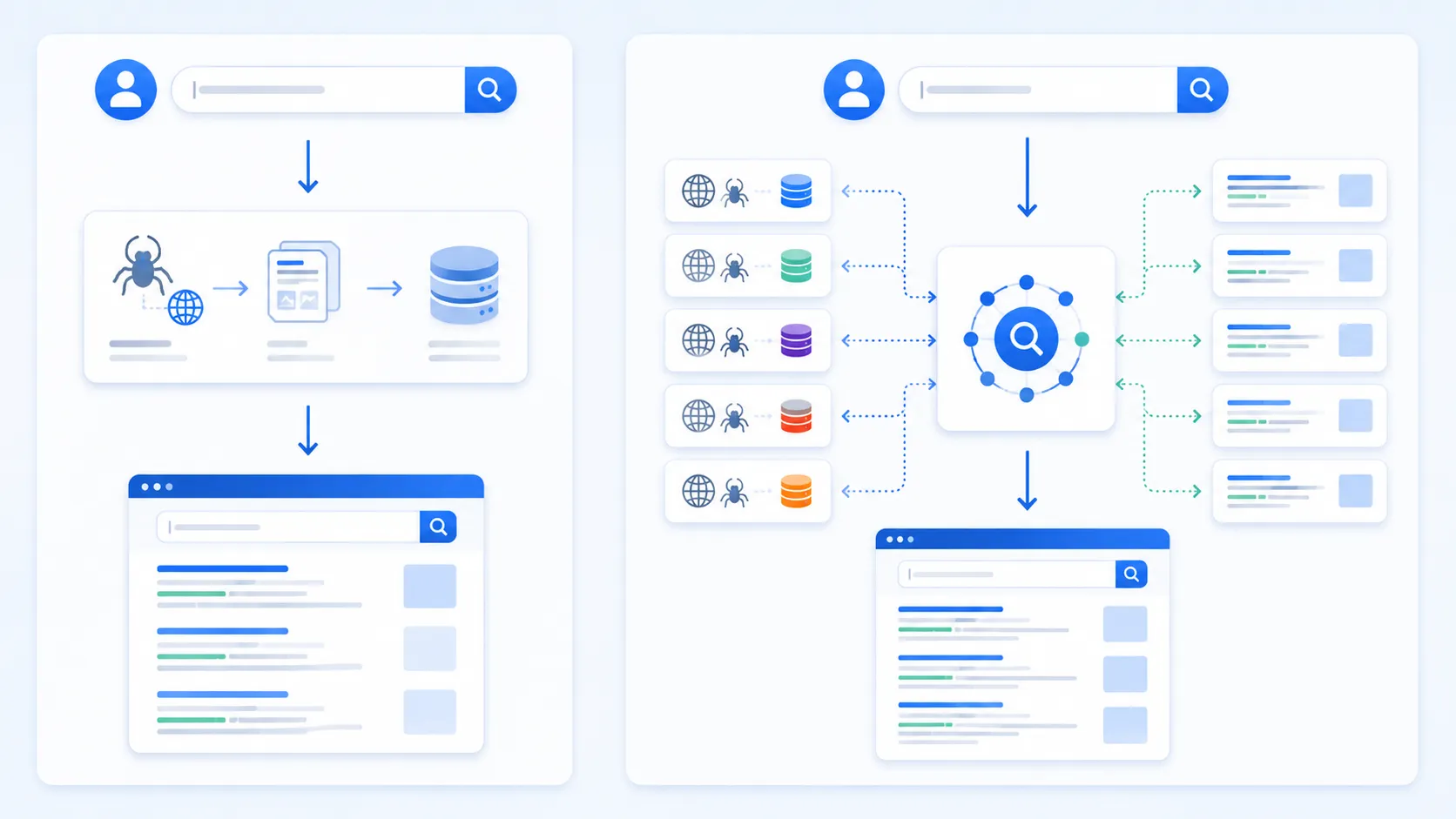
A traditional search engine invests significant resources in crawling websites, storing web pages, analyzing content, and building its own searchable database. Every query is answered from that proprietary index.
A meta search engine skips this expensive indexing process. Instead, it acts as an intelligent intermediary. When you submit a search, it forwards your query to multiple search providers, gathers their responses, filters duplicate entries, and displays a unified results page.
This architecture allows meta search engines to focus on result aggregation, privacy features, and ranking improvements rather than maintaining global web infrastructure.
Comparison at a Glance
| Feature | Traditional Search Engine | Meta Search Engine |
|---|---|---|
| Own Web Index | ✅ Yes | ❌ No |
| Crawls Websites | ✅ Yes | ❌ No |
| Uses Multiple Search Engines | ❌ No | ✅ Yes |
| Combines Results | ❌ No | ✅ Yes |
| Removes Duplicate Results | Limited | ✅ Yes |
| Privacy Focus | Varies | Usually Higher |
| Infrastructure Cost | Very High | Lower |
| Search Coverage | Single Index | Multiple Sources |
The Evolution of Meta Search Engines
Meta search technology emerged in the mid-1990s when the web was expanding rapidly and no single search engine offered complete coverage.
Early systems demonstrated that combining results from multiple providers could improve search quality and expose information that individual engines missed. Over time, as Google became the dominant search platform, interest in meta search shifted toward privacy, research, and specialized applications.
Today, the technology has evolved again. Modern meta search engines emphasize transparent sourcing, customizable ranking, open-source development, and privacy-focused search. Some also integrate AI-assisted ranking and filtering while still presenting links to the original sources.
This evolution reflects changing user expectations: people want comprehensive results without sacrificing privacy or relying entirely on a single company's algorithms.
How Does a Meta Search Engine Work?
At a high level, the process consists of five stages:
- The user enters a search query.
- The platform forwards that query to multiple search providers.
- Results are collected from each provider.
- Duplicate pages are identified and removed.
- Remaining results are ranked and displayed in a unified interface.
Unlike traditional search engines, the heavy lifting of crawling and indexing has already been performed by the underlying search providers. The meta search engine focuses on orchestration, filtering, and presentation.
Real-World Example
Imagine you're searching for:
Best project management software for remote teams
Instead of relying on one search provider, a meta search engine may gather results from several sources. One engine highlights enterprise software, another surfaces independent reviews, while another prioritizes technical documentation and user communities.
The final page combines these perspectives into a more balanced result set, helping you discover options you might otherwise miss.
Common Mistake
Many users assume a meta search engine always returns more results than Google.
That's not necessarily true.
Its value lies in greater diversity and broader source coverage, not simply a larger number of links. Quality aggregation often provides more useful information than a longer list of similar results.
Expert Tip
For research-heavy tasks—such as competitor analysis, academic research, technical troubleshooting, or software evaluations—compare findings from both a traditional search engine and a reputable meta search engine. The differences in ranking and source diversity often reveal valuable resources that would otherwise remain undiscovered.
Key Takeaways
- A meta search engine does not maintain its own web index.
- It retrieves information from multiple search providers.
- It filters duplicates and consolidates results into one interface.
- Its strengths include broader coverage, increased privacy, and multiple perspectives.
- In 2026, meta search engines complement—not replace—traditional search engines and AI-powered search tools.
Search Engine vs Meta Search Engine: What’s the Difference?
Many people use the terms search engine and meta search engine interchangeably, but they solve different problems.
A traditional search engine is responsible for discovering, crawling, indexing, and ranking web pages. A meta search engine, on the other hand, doesn't maintain its own web index. Instead, it sends your query to multiple search providers, collects their responses, removes duplicate results, and presents a consolidated list.
Think of it this way:
- Google is like a library that owns millions of books.
- A meta search engine is like a librarian who visits several libraries, collects the best books from each, and hands you one curated list.
Understanding this distinction helps you choose the right tool depending on your goal—whether you're looking for speed, comprehensive research, privacy, or broader search coverage.
Traditional Search Engine Architecture
To appreciate how meta search engines work, it's helpful to understand what happens behind the scenes of a traditional search engine.
Step 1: Web Crawling
Automated bots (often called web crawlers or spiders) continuously scan the internet.
Their job is to:
- Discover new websites
- Find updated pages
- Follow internal links
- Detect deleted pages
Every day, billions of URLs are discovered and processed by search engine crawlers. Google explains this process in its documentation on how Google Search works.
Example
When you publish a new blog on Jaseir Technologies, Google's crawler eventually visits the page and discovers it.
Step 2: Indexing
After crawling, the search engine analyzes the page.
It studies:
- Content
- Images
- Videos
- Metadata
- Headings
- Internal links
- Structured data
- Page speed
- Mobile friendliness
The processed information is then stored in a massive database called the search index.
Without indexing, a page cannot appear in search results.
Step 3: Ranking
When someone searches,
"Best CRM Software"
Google doesn't search the internet in real time.
Instead, it searches its own index and ranks pages using hundreds of ranking signals, including:
- Content relevance
- Authority
- Backlinks
- Freshness
- User experience
- Search intent
- Helpful content
- Core Web Vitals
How a Meta Search Engine Works Behind the Scenes
Unlike Google or Bing, a meta search engine skips the expensive crawling and indexing stages.
Instead, it performs these steps:
User Search
↓
Meta Search Engine
↓
Google
Bing
Yahoo
Brave Search
DuckDuckGo
↓
Collect Results
↓
Remove Duplicates
↓
Rank Results
↓
Display One Unified List
Notice that the meta search engine acts as an intelligent aggregator rather than a search provider.
Real-World Example
Imagine you're searching for
Best Email Marketing Platform
Google may prioritize:
- HubSpot
- Mailchimp
- Constant Contact
Meanwhile, Bing might rank:
- Brevo
- Campaign Monitor
DuckDuckGo could surface:
- Reddit discussions
- Independent blog reviews
- Smaller comparison websites
A meta search engine combines all these perspectives into a single results page, giving you a broader view of the available options.
Search Engine vs Meta Search Engine
| Feature | Search Engine | Meta Search Engine |
|---|---|---|
| Own Search Index | ✅ Yes | ❌ No |
| Crawls Websites | ✅ Yes | ❌ No |
| Stores Web Pages | ✅ Yes | ❌ No |
| Uses Other Search Engines | ❌ No | ✅ Yes |
| Combines Multiple Sources | ❌ No | ✅ Yes |
| Removes Duplicate Results | Limited | ✅ Yes |
| Privacy Features | Varies | Often Better |
| Infrastructure Cost | Very High | Lower |
| Search Diversity | Limited to Own Index | Multiple Indexes |
| Custom Ranking | Yes | Limited |
Advantages of Meta Search Architecture
One of the biggest strengths of a meta search engine is that it reduces dependence on a single search provider.
Instead of relying entirely on Google's algorithm, users receive results from multiple ecosystems.
Benefits include:
- Better search diversity
- More balanced viewpoints
- Improved privacy
- Less personalization bias
- Wider content discovery
- Better research capabilities
Limitations of Meta Search Architecture
No technology is perfect.
Because meta search engines depend on third-party providers, they also inherit certain limitations.
Examples include:
- Slower response time
- Limited access to proprietary ranking signals
- API restrictions
- Fewer advanced search operators
- Dependency on external services
For everyday searches, Google is usually faster.
For research, however, broader coverage can outweigh the slight delay.
Google vs Dogpile
Dogpile remains one of the most recognized examples of a classic meta search engine.
Although it doesn't compete directly with Google in terms of infrastructure, it provides a different search experience.
| Feature | Dogpile | |
|---|---|---|
| Own Search Index | ✅ | ❌ |
| Uses Multiple Engines | ❌ | ✅ |
| AI Features | Extensive | Limited |
| Personalized Results | High | Lower |
| Search Diversity | Medium | High |
| Privacy | Moderate | Better |
| Ads | Extensive | Fewer |
| Index Size | Massive | Depends on Providers |
When Google Is Better
Google is often the best choice when you need:
- Local business information
- Maps
- Shopping
- News
- Videos
- Real-time updates
- AI Overviews
- Instant answers
When Dogpile Is Better
Dogpile can be useful when:
- Researching multiple viewpoints
- Comparing products
- Looking for niche websites
- Avoiding personalization bias
- Discovering less prominent sources
Meta Search Engine vs AI Search
One of the biggest changes in search over the past few years has been the rise of AI-powered search experiences.
Although people sometimes group them together, meta search and AI search solve different problems.
A meta search engine aggregates links from multiple search providers.
An AI search engine analyzes information, summarizes it, and often generates a direct answer in natural language.
Comparison
| Feature | Meta Search | AI Search |
|---|---|---|
| Combines Multiple Search Engines | ✅ | Sometimes |
| Generates Answers | ❌ | ✅ |
| Provides Website Links | ✅ | ✅ |
| Uses Large Language Models | Usually No | Yes |
| Shows Multiple Perspectives | High | Moderate |
| Best for Research | Excellent | Good |
| Best for Quick Answers | Moderate | Excellent |
Example
Suppose you ask:
"What is the best project management software?"
AI Search
Might respond with:
Based on features, pricing, and customer reviews, Asana and Monday.com are excellent choices...
The AI summarizes the information.
Meta Search
Instead shows:
- Independent reviews
- Reddit discussions
- Gartner reports
- Vendor websites
- Comparison articles
- User experiences
You evaluate the sources yourself.
Traditional Search vs Generative Search
Generative AI has changed how people interact with information.
Instead of showing ten blue links, AI attempts to answer the question immediately.
| Traditional Search | Generative Search |
|---|---|
| Returns Links | Generates Answers |
| User Reads Sources | AI Summarizes Sources |
| More Manual Research | Faster Decisions |
| Higher Transparency | May Omit Sources |
| Better for Verification | Better for Simplicity |
Expert Insight
As an SEO agency, we've observed that relying on a single search platform can create blind spots during competitor analysis or market research. Comparing results from a traditional search engine, a meta search engine, and an AI search assistant often uncovers different sources, opinions, and ranking patterns. For businesses making strategic decisions, this broader perspective leads to more informed conclusions than depending on one search experience alone.
Which One Should You Choose?
| Goal | Best Option |
|---|---|
| Find Local Businesses | |
| Research Multiple Sources | Meta Search Engine |
| Academic Research | Meta Search Engine |
| Technical Documentation | Google + Meta Search |
| Product Comparison | Meta Search Engine |
| Quick Definition | AI Search |
| Long-form Learning | Google + AI Search |
| Competitor Research | Meta Search + Google |
Expert Tip: You don't have to choose just one. Many professionals use Google for speed, AI search for quick summaries, and a meta search engine when they want broader perspectives or to validate information from multiple sources.
Common Misconceptions
"Meta search engines are better than Google."
Not always. They serve different purposes. Google excels at speed, local search, and real-time information, while meta search engines are stronger for broad research and reducing reliance on a single search provider.
"Meta search engines are more private."
Many privacy-focused meta search engines minimize tracking, but privacy varies by platform. Always review the provider's privacy policy before assuming anonymity.
"AI search has replaced meta search."
AI search and meta search complement each other. AI helps summarize information, while meta search helps you discover a wider range of original sources.
Best Meta Search Engines in 2026
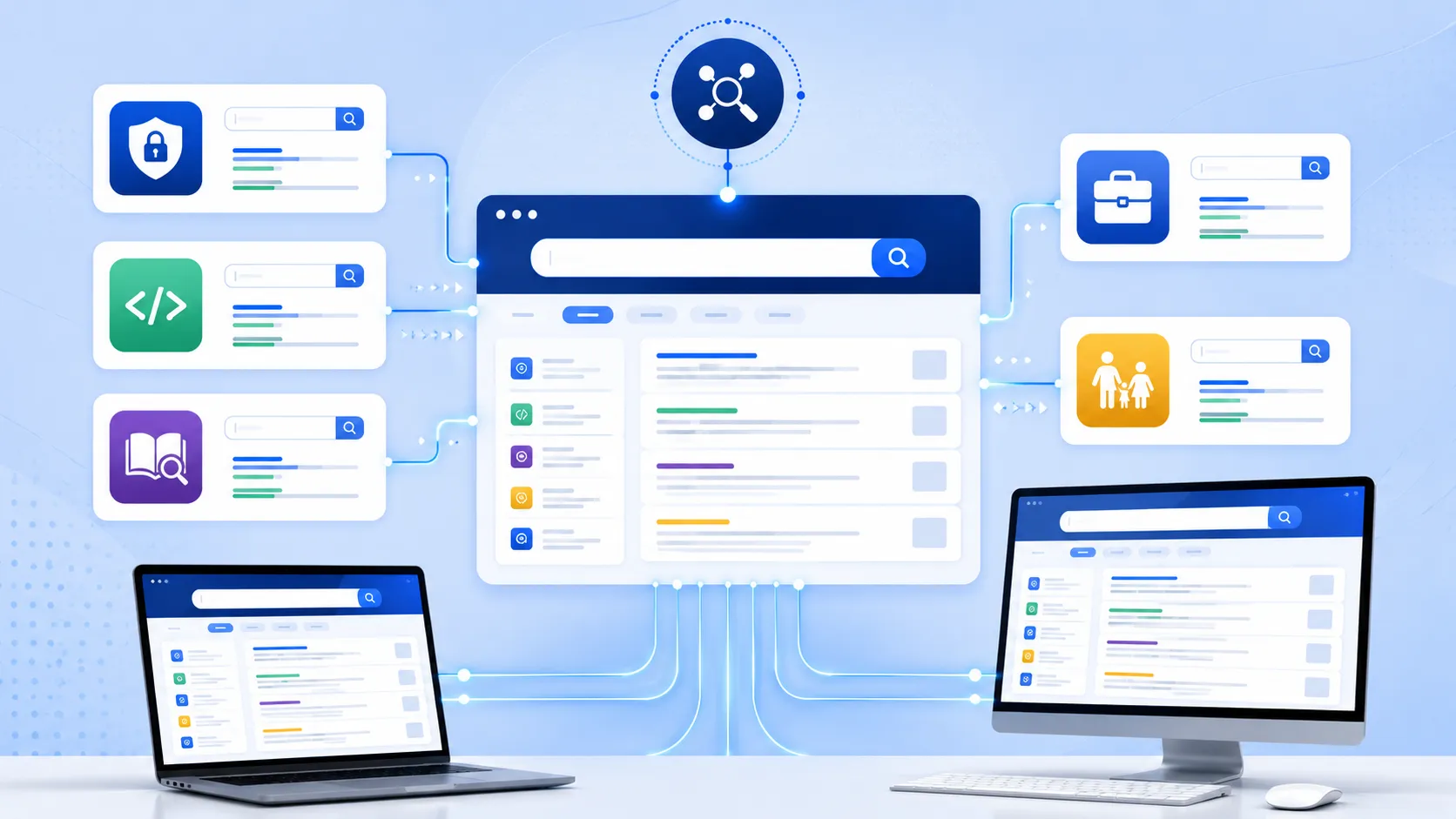
Not all meta search engines are built for the same audience. Some prioritize privacy, others focus on customization, while a few aim to deliver the widest possible range of search results.
Choosing the right platform depends on why you're searching rather than simply picking the most popular name.
For example:
- A marketer researching competitors needs broad result coverage.
- A developer may prefer an open-source solution.
- A journalist values unbiased search results.
- A privacy-conscious user wants minimal tracking.
- A student benefits from diverse academic resources.
Let's explore the leading options available in 2026.
1. Dogpile
Dogpile is one of the oldest and most recognized meta search engines. Instead of maintaining its own search index, it aggregates results from multiple search providers and presents them in a single interface.
Although its design is relatively simple, Dogpile remains useful for users who want broader web coverage than relying on one search engine alone.
Best For
- General web searches
- Product comparisons
- Research
- Multiple perspectives
Advantages
✔ Easy to use
✔ Fast search experience
✔ Multiple search sources
✔ Simple interface
Limitations
- Fewer advanced search tools
- Less customization
- Older user interface
Example
Suppose you're comparing:
Best CRM Software
Dogpile may return
- Independent review sites
- Software vendors
- Reddit discussions
- Business blogs
- Technology publications
instead of emphasizing only one ranking algorithm.
2. Startpage
Startpage has become one of the most trusted privacy-focused search platforms.
Unlike many alternatives, it allows users to access Google search results while minimizing tracking and protecting personal information.
For users who appreciate Google's relevance but want better privacy, Startpage offers a compelling balance.
Best For
- Privacy
- Everyday searching
- Business users
- Journalists
Advantages
✔ Excellent privacy
✔ Familiar search quality
✔ Anonymous browsing options
✔ Minimal data collection
Limitations
- Limited personalization
- Fewer integrated services compared with Google
Real-World Use Case
Imagine you're researching competitors without wanting search personalization to influence your results.
Using Startpage can help reduce personalization bias while still surfacing high-quality web pages.
3. SearXNG
SearXNG has gained significant popularity among developers and privacy enthusiasts because it is completely open source. You can explore its features, architecture, and deployment options in the official SearXNG documentation.
Organizations can even deploy their own instance.
Unlike commercial search engines, SearXNG offers exceptional transparency and flexibility.
Best For
- Developers
- Open-source communities
- Privacy-conscious users
- Organizations
Advantages
✔ Open source
✔ Highly customizable
✔ Self-hosting support
✔ No vendor lock-in
Limitations
- Requires technical knowledge
- Public instances may vary in reliability
Example
A software company can deploy its own SearXNG instance internally, allowing employees to search multiple providers without exposing search behavior to external services.
4. MetaGer
MetaGer is a Germany-based meta search engine that emphasizes transparency, sustainability, and user privacy.
Unlike many commercial platforms, MetaGer is operated with a strong focus on ethical search practices.
Best For
- Researchers
- European users
- Privacy advocates
Advantages
✔ Privacy focused
✔ Transparent
✔ Ethical approach
✔ Independent organization
Limitations
- Smaller user base
- Fewer mainstream features
5. Swisscows
Swisscows combines semantic search technology with strong privacy protections.
It is particularly suitable for families, educational institutions, and users seeking a cleaner search experience.
Best For
- Families
- Students
- Schools
- Privacy-conscious users
Advantages
✔ Family-friendly
✔ Semantic search
✔ Privacy protection
✔ Clean interface
Comparison of the Best Meta Search Engines
| Platform | Privacy | Open Source | Best For | Ease of Use |
|---|---|---|---|---|
| Dogpile | ⭐⭐⭐ | No | General Search | ⭐⭐⭐⭐⭐ |
| Startpage | ⭐⭐⭐⭐⭐ | No | Privacy | ⭐⭐⭐⭐⭐ |
| SearXNG | ⭐⭐⭐⭐⭐ | Yes | Developers | ⭐⭐⭐ |
| MetaGer | ⭐⭐⭐⭐⭐ | Partial | Researchers | ⭐⭐⭐⭐ |
| Swisscows | ⭐⭐⭐⭐⭐ | No | Families | ⭐⭐⭐⭐⭐ |
Which Meta Search Engine Should You Choose?
Different users have different priorities.
| If You Want... | Recommended Tool |
|---|---|
| Maximum Privacy | Startpage |
| Open Source | SearXNG |
| Easy Everyday Search | Dogpile |
| Research | MetaGer |
| Family Safe Search | Swisscows |
There isn't one universally "best" meta search engine—the right choice depends on your goals, whether that's privacy, flexibility, or broader search coverage.
Advantages of Meta Search Engines
Meta search engines have remained relevant because they solve problems that traditional search engines don't always address.
Let's explore their biggest benefits.
1. Multiple Sources
Instead of relying on one search engine,
you gain information collected from several providers.
This often reveals
- additional websites
- alternative opinions
- niche resources
- industry blogs
that may not appear prominently elsewhere.
Example
Searching
Best ERP Software
might produce
- SAP
- Oracle
while another search provider highlights
- Odoo
- ERPNext
- Dolibarr
A meta search engine brings these together, giving you a broader perspective.
2. Better Research
Researchers often compare multiple sources before making conclusions.
Meta search engines naturally support this process.
Ideal for
- Market research
- Academic work
- Competitor analysis
- Business planning
3. Reduced Personalization
Traditional search engines personalize results based on
- browsing history
- location
- device
- previous searches
This can create "filter bubbles."
Many meta search engines reduce these personalization effects, exposing users to a wider variety of information.
4. Privacy
Several modern meta search engines avoid
- user profiling
- advertising personalization
- extensive tracking
- long-term search history storage
This makes them attractive for privacy-conscious users.
5. Better Discovery
Sometimes the best answer isn't on page one of Google.
Meta search engines can surface
- forums
- open-source projects
- niche blogs
- technical communities
that might otherwise be overlooked.
Disadvantages of Meta Search Engines
Despite their strengths, meta search engines also have trade-offs.
Understanding these limitations helps you decide when they're the right tool.
Slower Searches
Because queries are sent to multiple providers, results may take slightly longer to appear than a traditional search engine.
Limited Features
Many meta search engines don't provide integrated services such as
- Maps
- Shopping
- Flights
- Local business profiles
- AI-generated summaries
API Restrictions
Some search providers limit how third parties access their data.
This can occasionally reduce result freshness or completeness.
Dependency
A meta search engine depends on external search providers.
If those providers change their APIs or policies, the meta search engine must adapt accordingly.
Advantages vs Disadvantages
| Advantages | Disadvantages |
|---|---|
| Multiple search sources | Slower than Google |
| Better research | Depends on third-party APIs |
| More privacy | Limited advanced features |
| Reduced personalization | Fewer local search tools |
| Better discovery | Less comprehensive than Google's ecosystem |
Who Should Use Meta Search Engines?
Meta search engines aren't designed for every search, but they excel in specific situations.
Business Owners
Compare competitors across multiple search providers before making marketing or product decisions.
SEO Professionals
Analyze how different search ecosystems surface content and identify opportunities that may not appear in a single search engine.
Developers
Discover technical documentation, GitHub repositories, Stack Overflow discussions, and open-source resources from multiple indexes.
Students
Gather diverse academic references and viewpoints instead of relying on one search provider.
Journalists
Validate stories using multiple sources to reduce the risk of missing important perspectives.
Researchers
Find niche publications, whitepapers, and industry-specific content that may rank differently across search providers.
Expert Tip
If you're conducting high-value research—such as evaluating software, analyzing competitors, or planning a marketing strategy—don't rely solely on one search engine or one AI assistant. Cross-check information using a traditional search engine, a trusted meta search engine, and authoritative sources. This habit often uncovers insights that automated summaries or personalized rankings may overlook.
Mini Conclusion
Meta search engines continue to serve an important role in 2026. While they may not replace Google for everyday searches, they provide broader perspectives, stronger privacy options, and valuable research capabilities. Whether you're a business owner comparing tools or a developer seeking technical resources, choosing the right meta search engine can help you make better-informed decisions.
Get Free Strategy Call
Real-World Use Cases of Meta Search Engines
A meta search engine isn't intended to replace Google for every search. Its real value becomes clear when you need comprehensive research, unbiased information, or results from multiple search ecosystems.
Let's look at how different professionals use them in practice.
1. Competitor Research
If you're analyzing competitors, relying on a single search engine can give you a limited perspective.
A meta search engine helps uncover:
- Industry blogs
- Product reviews
- News articles
- Comparison websites
- Discussion forums
- Community recommendations
that may rank differently across various search providers.
Example
Suppose you're launching a CRM software product.
Instead of searching only on Google, a meta search engine may reveal:
- Independent review sites
- Reddit discussions
- GitHub projects
- YouTube tutorials
- Smaller industry publications
These additional sources provide a more complete view of your competitive landscape.
Common Mistake
Many businesses evaluate competitors using only Google's first page. This can overlook valuable niche resources and regional content.
Expert Tip
Create a spreadsheet to track competitors, review sites, pricing pages, and customer discussions found across different search providers. This often reveals marketing opportunities that aren't obvious from a single search engine.
2. Academic Research
Students and researchers benefit from comparing multiple viewpoints rather than relying on one ranking algorithm.
Use Cases
- Literature reviews
- Technical documentation
- Research papers
- Government reports
- Whitepapers
- Educational resources
Example
A student researching renewable energy storage may discover:
- University publications
- Government research
- IEEE articles
- Open-access journals
- Industry reports
that aren't equally visible in every search engine.
3. Product Comparisons
Consumers increasingly compare software, electronics, financial services, and business tools before making purchasing decisions.
A meta search engine helps gather:
- Expert reviews
- User experiences
- Comparison articles
- Community discussions
- Pricing pages
- Vendor documentation
Example
Searching for:
Best Email Marketing Software
can surface:
- Vendor websites
- Independent reviewers
- Reddit opinions
- YouTube comparisons
- Agency recommendations
allowing buyers to evaluate multiple perspectives.
4. SEO & Digital Marketing Research
SEO professionals rarely rely on a single search source.
They compare results across different ecosystems to understand:
- Content visibility
- Search intent
- Competitor positioning
- Keyword opportunities
- Emerging topics
At Jaseir Technologies, comparing search results from multiple sources is often part of content planning and competitor analysis. It helps identify gaps, uncover niche resources, and validate search intent before creating new content.
5. Software Development
Developers frequently search for:
- API documentation
- Framework tutorials
- Stack Overflow discussions
- GitHub repositories
- Official documentation
Different search engines may prioritize different technical resources.
Using a meta search engine increases the likelihood of discovering community solutions alongside official documentation.
Decision Matrix: When Should You Use a Meta Search Engine?
| Scenario | Recommended? | Why |
|---|---|---|
| General web browsing | ⭐⭐⭐ | Google may be faster |
| Academic research | ⭐⭐⭐⭐⭐ | Multiple perspectives |
| Competitor analysis | ⭐⭐⭐⭐⭐ | Better content discovery |
| Software comparisons | ⭐⭐⭐⭐⭐ | Diverse reviews |
| Technical troubleshooting | ⭐⭐⭐⭐ | Broader documentation |
| Local business search | ⭐⭐ | Traditional search engines perform better |
| Shopping | ⭐⭐ | Dedicated shopping search is more suitable |
| Privacy-focused browsing | ⭐⭐⭐⭐⭐ | Reduced tracking |
Common Mistakes People Make
Even experienced users misunderstand how meta search engines work.
Avoid these common mistakes.
Mistake 1: Assuming More Results Mean Better Results
Quality matters more than quantity.
Receiving 500 search results doesn't automatically make your research better.
Focus on:
- relevance
- authority
- freshness
- credibility
Mistake 2: Trusting Every Source Equally
A meta search engine aggregates results.
It does not verify whether every website is accurate.
Always evaluate:
- Author
- Publication
- References
- Date
- Expertise
especially for medical, legal, and financial information.
Mistake 3: Ignoring Official Sources
Community discussions are valuable.
However, official documentation should remain your primary reference when researching:
- APIs
- Government regulations
- Software documentation
- Standards
Mistake 4: Believing Meta Search Engines Are Completely Anonymous
Many privacy-focused platforms reduce tracking, but anonymity depends on the specific service and your overall browsing habits.
Using a privacy-focused browser and reviewing the provider's privacy policy offers a more complete understanding of your online privacy.
Mistake 5: Replacing Google Entirely
Meta search engines complement traditional search engines—they don't replace them.
The most effective research often combines:
- A trusted meta search engine
- AI search assistants
- Authoritative websites
Expert Tips for Better Search Results
Use Specific Queries
Instead of searching:
CRM
Search:
Best CRM software for manufacturing companies under 100 employees
The more specific your query, the more useful your results.
Compare Multiple Sources
Before making business decisions, compare:
- Official websites
- Industry publications
- User reviews
- Community discussions
- Independent experts
Verify Publication Dates
Technology changes quickly.
An article published five years ago may no longer reflect current best practices.
Whenever possible, prioritize recently updated resources.
Use Advanced Search Operators
Many underlying search engines support operators such as:
"exact phrase"site:filetype:intitle:
These can improve the precision of your searches.
Don't Ignore Small Websites
Some of the most practical tutorials and technical solutions come from independent creators, niche blogs, and developer communities.
Meta search engines can make these resources easier to discover.
Future of Meta Search Engines (2026 and Beyond)
Search technology is evolving rapidly.
Rather than disappearing, meta search engines are adapting to new expectations around AI, privacy, and transparency. As search technologies continue to evolve, web standards maintained by the World Wide Web Consortium (W3C) help ensure interoperability across the modern web.
Here are the trends shaping their future.
AI-Assisted Ranking
Instead of simply combining search results, future meta search engines are expected to use AI to:
- Group similar pages
- Highlight authoritative sources
- Remove low-quality content
- Summarize themes while still linking to original websites
Greater Privacy
As users become more aware of online tracking, demand for privacy-focused search solutions is likely to continue growing.
Future platforms may offer:
- Reduced tracking
- Anonymous searching
- Local processing
- Encrypted search requests
Personalized Without Profiling
One emerging direction is context-aware search that improves relevance without building extensive long-term user profiles.
This could provide useful customization while giving users greater control over their data.
Multi-Modal Search
Search is expanding beyond text.
Future meta search engines may aggregate results across:
- Text
- Images
- Videos
- PDFs
- Audio
- Research papers
- Code repositories
through a single interface.
AI + Meta Search
The most promising direction isn't choosing between AI and meta search—it's combining them.
Imagine entering a question and receiving:
- An AI-generated summary
- Links from multiple search engines
- Official documentation
- Community discussions
- Recent news
- Academic references
all in one place.
That combination could offer both convenience and transparency.
Quick Checklist: Should You Use a Meta Search Engine?
| Question | Yes | No |
|---|---|---|
| Do you need multiple viewpoints? | ✅ | |
| Are you researching competitors? | ✅ | |
| Do you value privacy? | ✅ | |
| Are you comparing products? | ✅ | |
| Do you only need a quick local search? | ✅ | |
| Do you need maps or navigation? | ✅ |
Mini Summary
Meta search engines are particularly valuable when you want to:
- Compare information from multiple sources
- Reduce dependence on a single search provider
- Discover niche resources
- Conduct detailed research
- Improve privacy while searching
They are not designed to replace traditional search engines but to complement them when broader coverage and diverse perspectives matter.
Frequently Asked Questions (FAQs)
1. What is a meta search engine?
A meta search engine is a search platform that retrieves results from multiple search engines instead of maintaining its own search index. It collects, filters, removes duplicate entries, and displays a unified list of results, helping users discover information from a wider range of sources.
2. How does a meta search engine work?
When you enter a query, the meta search engine sends it to several search providers simultaneously. It gathers the returned results, eliminates duplicates, ranks the remaining pages, and presents them in a single interface.
3. Does a meta search engine have its own database?
No. Unlike Google or Bing, most meta search engines do not crawl and index the web independently. They rely on results provided by other search engines.
4. Is Google a meta search engine?
No. Google is a traditional search engine. It maintains its own web crawler, index, and ranking algorithms instead of combining results from other search engines.
5. Is DuckDuckGo a meta search engine?
DuckDuckGo is not a pure meta search engine. It combines results from multiple sources, including its own crawler and external providers, while emphasizing user privacy.
6. Which is the best meta search engine?
The best choice depends on your needs:
- Startpage for privacy
- SearXNG for developers and self-hosting
- Dogpile for general web searches
- MetaGer for research
- Swisscows for family-friendly searching
7. Are meta search engines private?
Many meta search engines are designed to collect less user data than traditional search engines. However, privacy practices vary by provider, so always review the platform's privacy policy before assuming complete anonymity.
8. Why would someone use a meta search engine?
People use meta search engines to:
- Compare multiple sources
- Reduce personalization bias
- Discover niche content
- Conduct research
- Improve privacy
- Access broader search coverage
9. Are meta search engines better than Google?
Not necessarily. Google is excellent for local search, maps, shopping, and real-time information. Meta search engines are better suited for research, broader source discovery, and comparing perspectives.
10. Can businesses benefit from meta search engines?
Yes. Businesses can use them for:
- Competitor analysis
- Market research
- Product comparisons
- Content planning
- SEO research
- Trend discovery
11. Do meta search engines remove duplicate results?
Yes. One of their primary functions is identifying duplicate pages returned by multiple search providers and displaying only the most relevant version.
12. Are meta search engines free?
Most popular meta search engines are free to use, although some privacy-focused services may offer premium features or accept donations.
13. Can meta search engines improve SEO?
They do not directly improve rankings. However, they help SEO professionals analyze search visibility, discover competitors, identify content gaps, and research keywords across multiple search ecosystems.
14. What are the limitations of meta search engines?
Common limitations include:
- Dependence on third-party search providers
- Slower response times
- Limited local search capabilities
- Fewer integrated services like maps or shopping
- API restrictions
15. Will AI replace meta search engines?
AI search and meta search are likely to complement each other. AI provides summarized answers, while meta search engines help users explore multiple original sources and viewpoints.
Featured Snippet Optimization
40-Word Definition
A meta search engine is a search platform that retrieves results from multiple search engines instead of maintaining its own search index. It combines, filters, removes duplicates, and presents users with a single, consolidated list of relevant search results.
60-Word Definition
A meta search engine is a tool that submits a user's search query to multiple search engines, collects the responses, removes duplicate listings, and displays a unified results page. Unlike Google or Bing, it doesn't maintain its own web index. Instead, it improves search diversity by combining results from multiple sources.
Paragraph Snippet
A meta search engine is a search platform that gathers results from multiple search engines rather than using its own web index. It sends your query to different providers, combines their responses, removes duplicate pages, and presents a single list of results. This approach helps users discover more diverse information while reducing reliance on one search engine.
List Snippet
How a Meta Search Engine Works
- User enters a search query.
- The query is sent to multiple search engines.
- Results are collected.
- Duplicate pages are removed.
- Results are ranked.
- A unified search results page is displayed.
Table Snippet
| Search Engine | Meta Search Engine |
|---|---|
| Own index | No own index |
| Crawls websites | Uses multiple search providers |
| Single result source | Multiple result sources |
| Personalized ranking | Aggregated ranking |
People Also Ask (PAA)
1. What is a meta search engine?
A search tool that combines results from multiple search engines into one interface.
2. How is a meta search engine different from Google?
Google uses its own search index, while a meta search engine aggregates results from multiple providers.
3. Why do people use meta search engines?
To gain broader search coverage, compare information, and improve privacy.
4. Which meta search engine is best?
Startpage, SearXNG, Dogpile, and MetaGer are among the leading options.
5. Is DuckDuckGo a meta search engine?
DuckDuckGo combines multiple sources but also has its own indexing capabilities, so it isn't considered a pure meta search engine.
6. Do meta search engines improve privacy?
Many do by reducing tracking and limiting personalized search histories.
7. Are meta search engines safe?
Yes, when using reputable platforms with transparent privacy policies.
8. Can businesses use meta search engines?
Yes. They are valuable for market research, SEO analysis, and competitor monitoring.
9. Are meta search engines free?
Most are available at no cost.
10. Which is better for research: Google or a meta search engine?
Google is excellent for speed, while meta search engines provide broader perspectives.
11. Do meta search engines have AI?
Some are beginning to integrate AI-assisted ranking and summaries, but many still focus on aggregating traditional search results.
12. Can I use a meta search engine for academic research?
Yes. They help uncover diverse sources, journals, and publications.
13. Do meta search engines rank websites?
They may reorder aggregated results using their own filtering logic, but they do not build full ranking systems like Google.
14. Can developers benefit from meta search engines?
Yes. Developers can discover documentation, code repositories, and community discussions across multiple search providers.
15. Are meta search engines suitable for shopping?
They can support product research but usually lack the specialized shopping features of traditional search engines.
16. What are examples of meta search engines?
Dogpile, Startpage, SearXNG, MetaGer, and Swisscows.
17. Do meta search engines index websites?
No. They typically rely on existing search indexes.
18. Can a meta search engine replace Google?
Not completely. They are best used alongside traditional search engines.
19. Are meta search engines good for SEO professionals?
Yes. They provide additional perspectives on search visibility and content discovery.
20. What is the future of meta search engines?
The future points toward AI-assisted aggregation, stronger privacy features, and multimodal search experiences.
Final Thoughts
Search technology is changing faster than ever. Between AI-generated answers, personalized search results, and growing privacy concerns, users need tools that provide broader perspectives and greater transparency.
A meta search engine fills that role by combining results from multiple search providers into a single interface. While it won't replace Google for every task, it remains an excellent choice for research, competitor analysis, product comparisons, and discovering information that might otherwise remain hidden.
For businesses, understanding how these platforms work isn't just a technical exercise—it's a competitive advantage. Knowing where and how information appears across different search ecosystems can improve content strategies, strengthen SEO campaigns, and support better decision-making. Businesses should also stay informed about search engine best practices through resources such as Google Search Central.
If you're planning your digital marketing strategy, remember that visibility isn't just about ranking on one search engine. It's about creating trustworthy, high-quality content that serves users wherever they search.
If you'd like expert guidance on SEO, technical optimization, or content strategy, the team at Jaseir Technologies Pvt. Ltd. can help you build a stronger, search-first online presence without relying on short-term tactics.


