
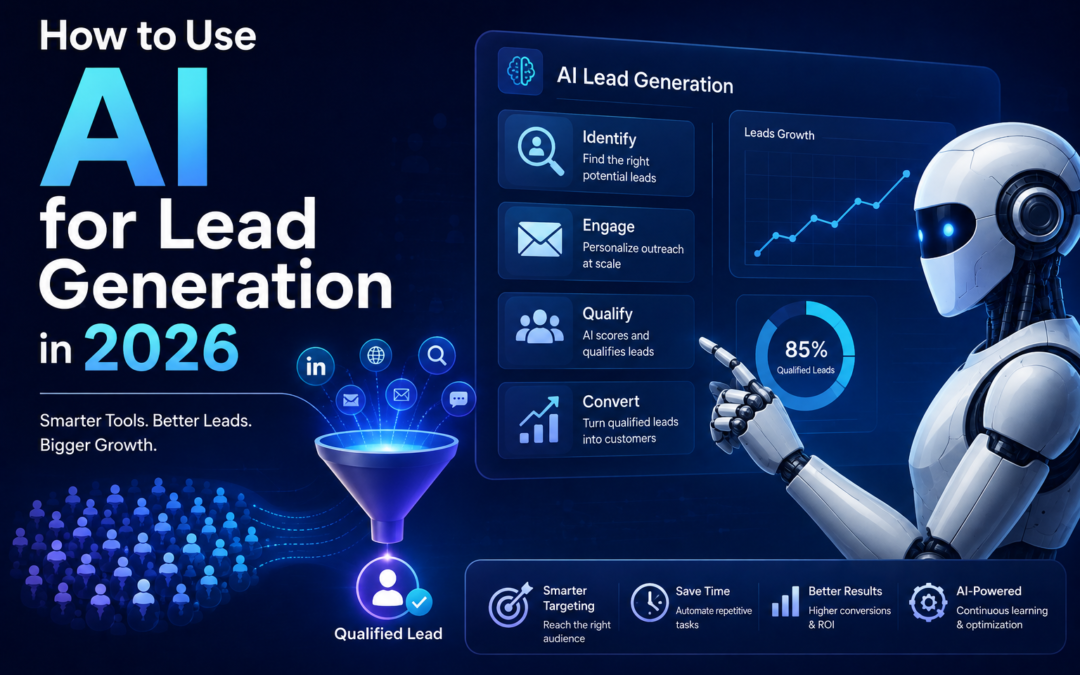
Generating quality leads has always been one of the biggest challenges for businesses. Companies spend significant time and money searching for potential customers, creating marketing campaigns, and following up with prospects.
However, traditional lead generation methods are becoming less effective. Customers expect personalized communication, faster responses, and better experiences.
This is where AI for lead generation is transforming the way businesses attract and convert customers.
In 2026, artificial intelligence is helping companies identify ideal prospects, automate outreach, personalize marketing campaigns, analyze customer behavior, and improve sales performance.
AI-powered lead generation allows businesses to move beyond manual prospecting and build smarter, more efficient sales systems.
In this guide, we will explore how businesses can use AI for lead generation in 2026, the best strategies to implement, and how AI can help improve conversions and revenue growth.
AI lead generation uses artificial intelligence technology to identify potential customers, analyze their behavior, and automate the process of attracting and nurturing leads.
Traditional lead generation often requires:
- Manual prospect research
- Cold outreach
- Data collection
- Email follow-ups
- Customer segmentation
AI automation improves this process by using machine learning, predictive analytics, and automation tools.
AI can help businesses:
- Find ideal customers
- Predict buying behavior
- Personalize marketing messages
- Automate follow-ups
- Score leads automatically
- Improve sales decisions
Why AI Lead Generation Matters in 2026
The business environment in 2026 is becoming more competitive.
Companies need smarter ways to reach customers because:
Customers Expect Personalization
Generic marketing messages are becoming less effective.
AI allows businesses to create personalized experiences based on:
- Customer interests
- Online behavior
- Previous interactions
- Buying patterns
Sales Teams Need Better Efficiency
Sales representatives spend many hours searching for leads and performing repetitive tasks.
AI automation helps sales teams focus on:
- Building relationships
- Closing deals
- Strategic conversations
Data Is Becoming More Valuable
Businesses collect large amounts of customer data.
AI helps analyze this information and identify:
- High-quality prospects
- Buying signals
- Market opportunities
1. Use AI to Identify Your Ideal Customers
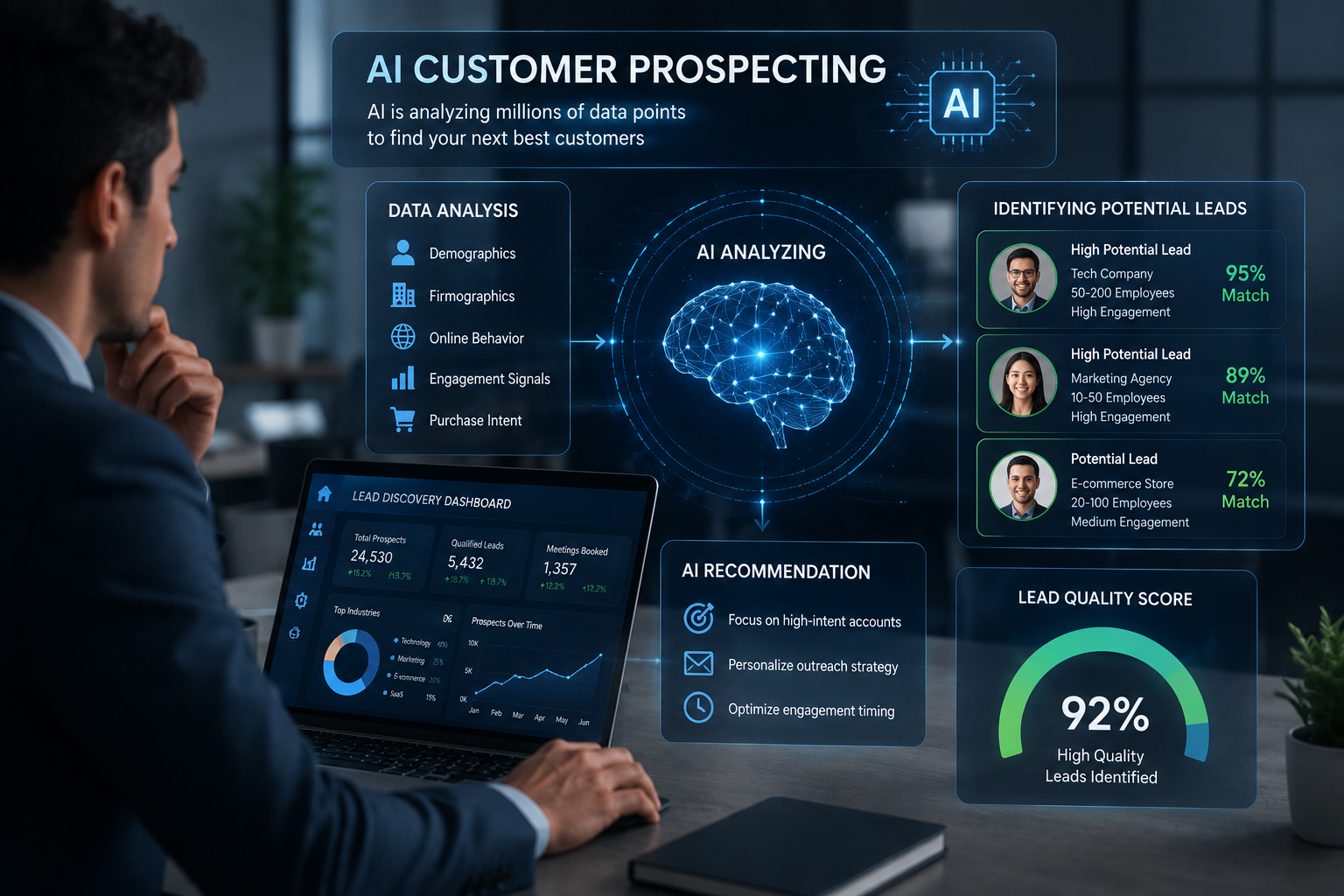
One of the biggest advantages of AI is its ability to analyze customer data.
AI tools can study:
- Website visitors
- Customer interactions
- Purchase history
- Social media behavior
- Search patterns
Using this information, AI can create an ideal customer profile (ICP).
For example:
A software company can use AI to identify businesses most likely to need its solution based on company size, industry, and online behavior.
Benefits:
- Better targeting
- Higher-quality leads
- Reduced marketing waste
- Improved conversion rates
2. Automate Lead Research and Prospecting
Lead research can be time-consuming.
AI-powered prospecting tools help businesses automatically collect information about potential customers.
AI can analyze:
- Company information
- Job roles
- Industry data
- Online activity
- Customer interests
Sales teams can spend less time researching and more time connecting with qualified prospects.
Benefits:
- Faster prospect discovery
- More accurate lead lists
- Reduced manual research
3. Use AI Chatbots to Capture Leads 24/7
AI chatbots are becoming one of the most effective lead generation tools.
A website visitor may leave if they cannot get immediate answers.
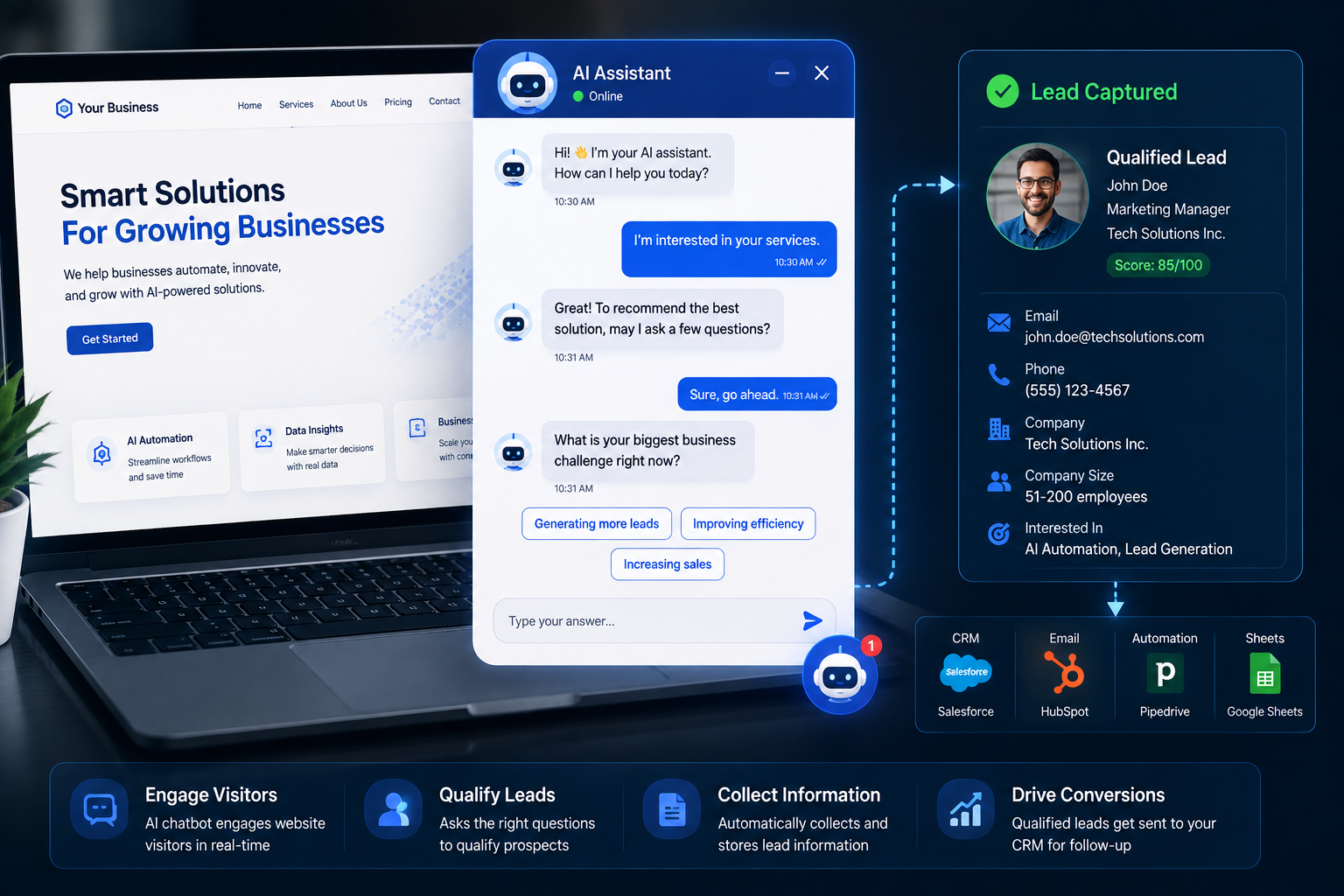
AI chatbots can:
- Answer customer questions
- Collect contact information
- Recommend products
- Schedule appointments
- Qualify leads
For example:
A service company can use an AI chatbot to ask visitors about their needs and automatically send qualified leads to the sales team.
Benefits:
- Capture leads anytime
- Faster customer response
- Better user experience
4. Personalize Email Marketing With AI
Email marketing remains a powerful lead generation channel.
AI improves email campaigns by helping businesses:
- Write personalized emails
- Segment audiences
- Predict best sending times
- Automate follow-ups
- Improve subject lines
Instead of sending the same message to everyone, AI creates targeted campaigns based on customer behavior.
Example:
An ecommerce company can send different emails to:
- New visitors
- Returning customers
- Abandoned cart users
5. Use AI Lead Scoring to Find Better Opportunities
Not every lead has the same value.
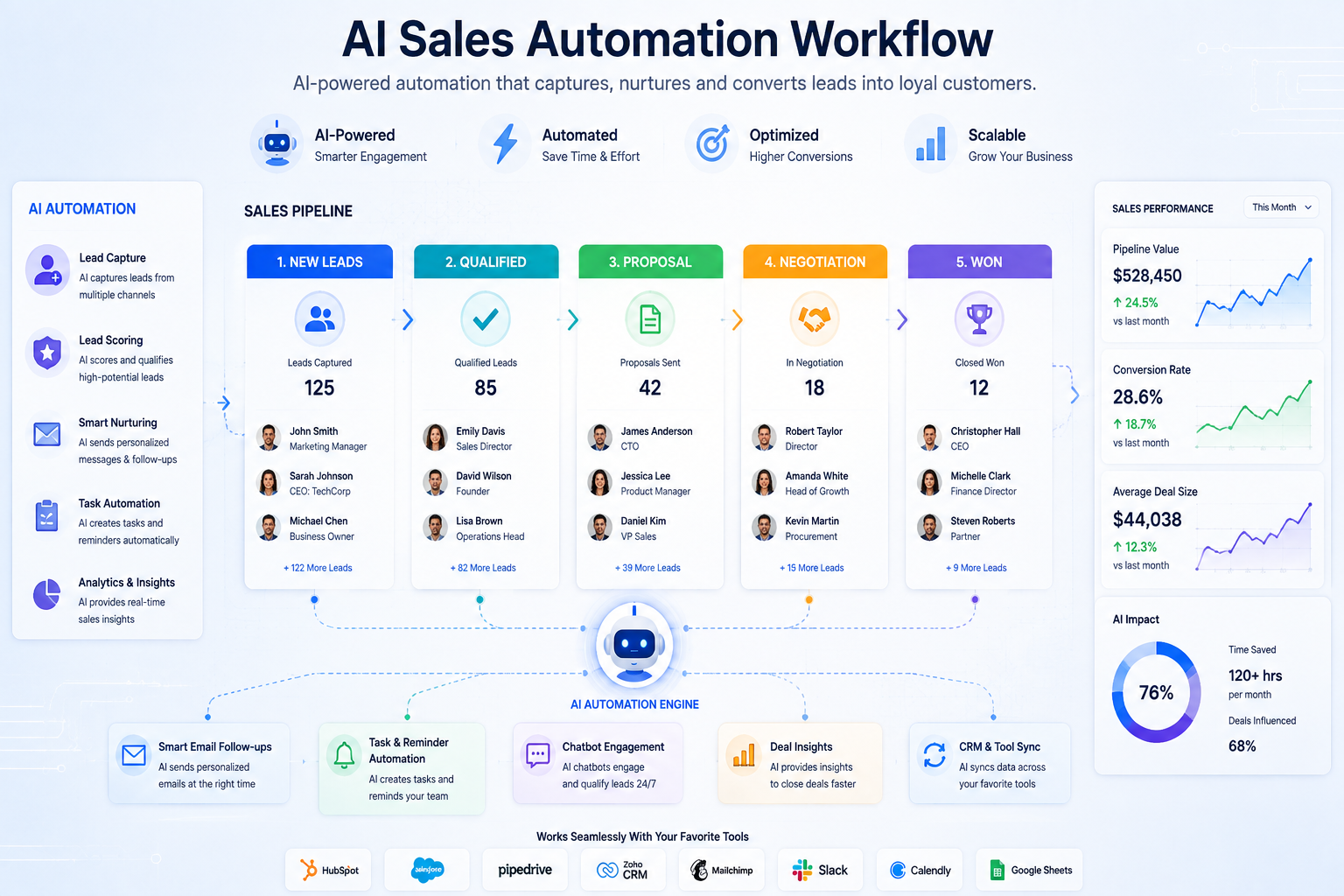
AI lead scoring helps businesses identify which prospects are most likely to become customers.
AI analyzes:
- Engagement level
- Website activity
- Email interactions
- Company information
- Purchase intent
Sales teams can focus their time on the highest-value opportunities.
Benefits:
- Higher sales efficiency
- Faster conversions
- Better resource allocation
6. Automate Sales Follow-Ups
Many leads are lost because businesses fail to follow up consistently.
AI automation helps manage:
- Follow-up emails
- Appointment reminders
- Sales notifications
- Customer conversations
AI ensures prospects receive timely communication throughout the buying journey.
7. Use Predictive Analytics to Find Future Customers
Predictive AI analyzes existing data to forecast future customer behavior.
Businesses can use AI predictions to identify:
- Customers likely to buy
- Products customers may need
- Marketing opportunities
This allows companies to become more proactive instead of waiting for customers to take action.
8. Create AI-Powered Content for Lead Generation
Content marketing helps businesses attract potential customers.
AI can assist with:
- Blog ideas
- Social media posts
- Landing page copy
- Email content
- SEO optimization
AI helps marketers create content faster while maintaining personalization.
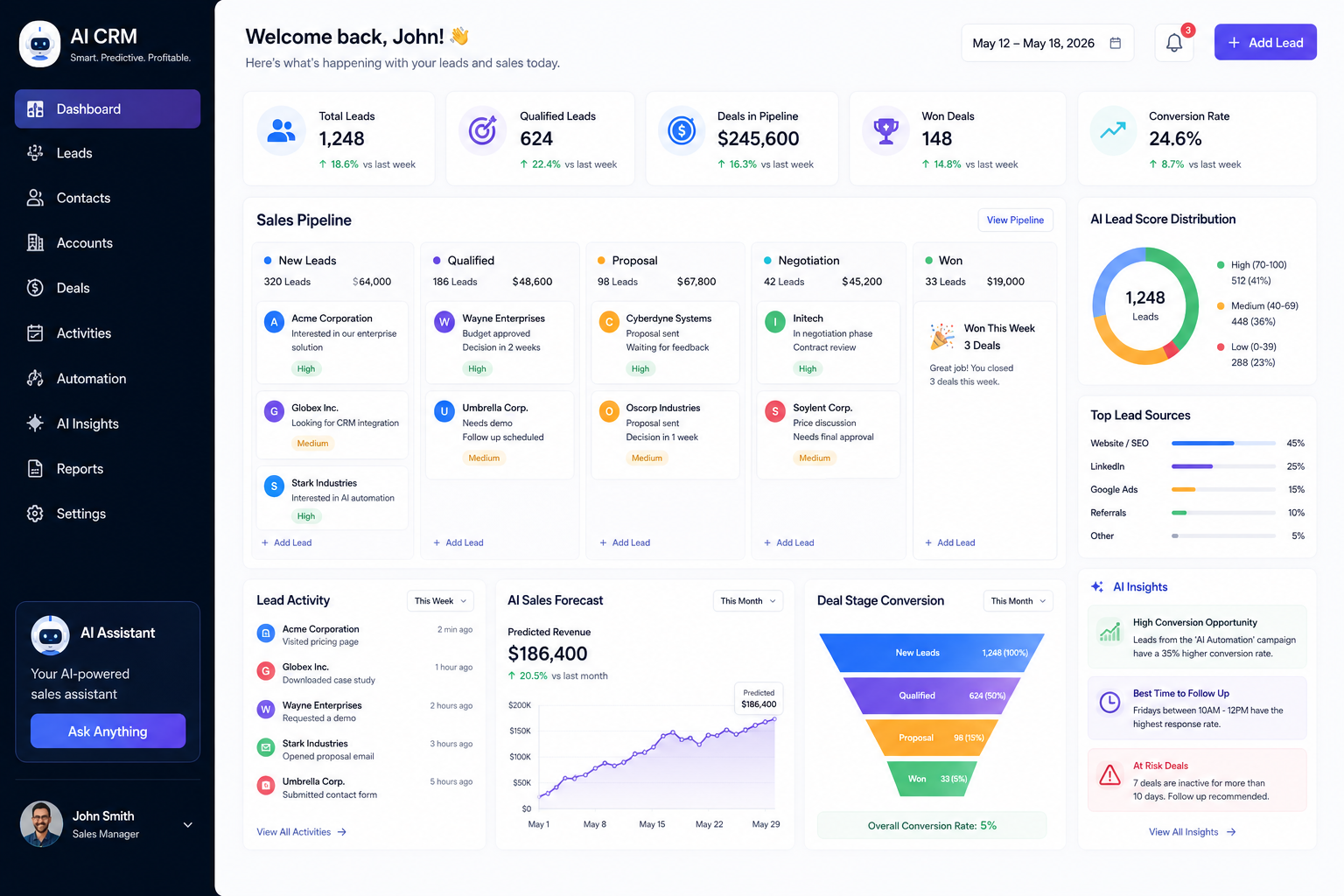
9. Integrate AI With CRM Systems
CRM systems store valuable customer information.
When AI is connected with CRM platforms, businesses can automate:
- Lead management
- Customer segmentation
- Sales predictions
- Follow-up tasks
AI-powered CRM systems help companies maintain better customer relationships.
Best AI Lead Generation Tools in 2026
Businesses can use different AI tools depending on their needs.
AI Prospecting Tools
Used for:
- Finding potential customers
- Building lead lists
- Research automation
AI Chatbots
Used for:
- Website engagement
- Lead qualification
- Customer support
AI CRM Platforms
Used for:
- Lead management
- Sales automation
- Customer insights
AI Marketing Tools
Used for:
- Content creation
- Email automation
- Campaign optimization
How to Implement AI Lead Generation Strategy
Step 1: Define Your Target Audience
Understand:
- Who your ideal customers are
- Their problems
- Their buying behavior
Step 2: Choose the Right AI Tools
Select tools based on:
- Business goals
- Sales process
- Marketing strategy
Step 3: Automate Repetitive Tasks
Start with:
- Lead collection
- Email follow-ups
- Customer qualification
Step 4: Analyze Results
Track:
- Lead quality
- Conversion rates
- Sales growth
- Customer engagement
Common AI Lead Generation Mistakes
1. Depending Completely on AI
AI should support human sales teams, not replace relationships.
2. Poor Data Quality
AI results depend on accurate customer information.
3. Lack of Personalization
Automation should still feel human.
Future of AI Lead Generation
AI lead generation will continue evolving with:
- AI sales agents
- Real-time customer predictions
- Advanced personalization
- Automated conversations
- Smarter CRM systems
Businesses that adopt AI early will have a competitive advantage.
Conclusion
AI is changing the future of lead generation.
In 2026, businesses that use AI for lead generation can find better prospects, automate repetitive tasks, personalize customer experiences, and increase sales efficiency.
The key is not simply adopting AI tools but creating a smart strategy that combines automation with human relationships.
Businesses that start building AI-powered lead generation systems today will be better prepared for tomorrow's competitive market.


