

3. AI Email Management
Email can consume a significant amount of time, particularly for business owners and office staff.
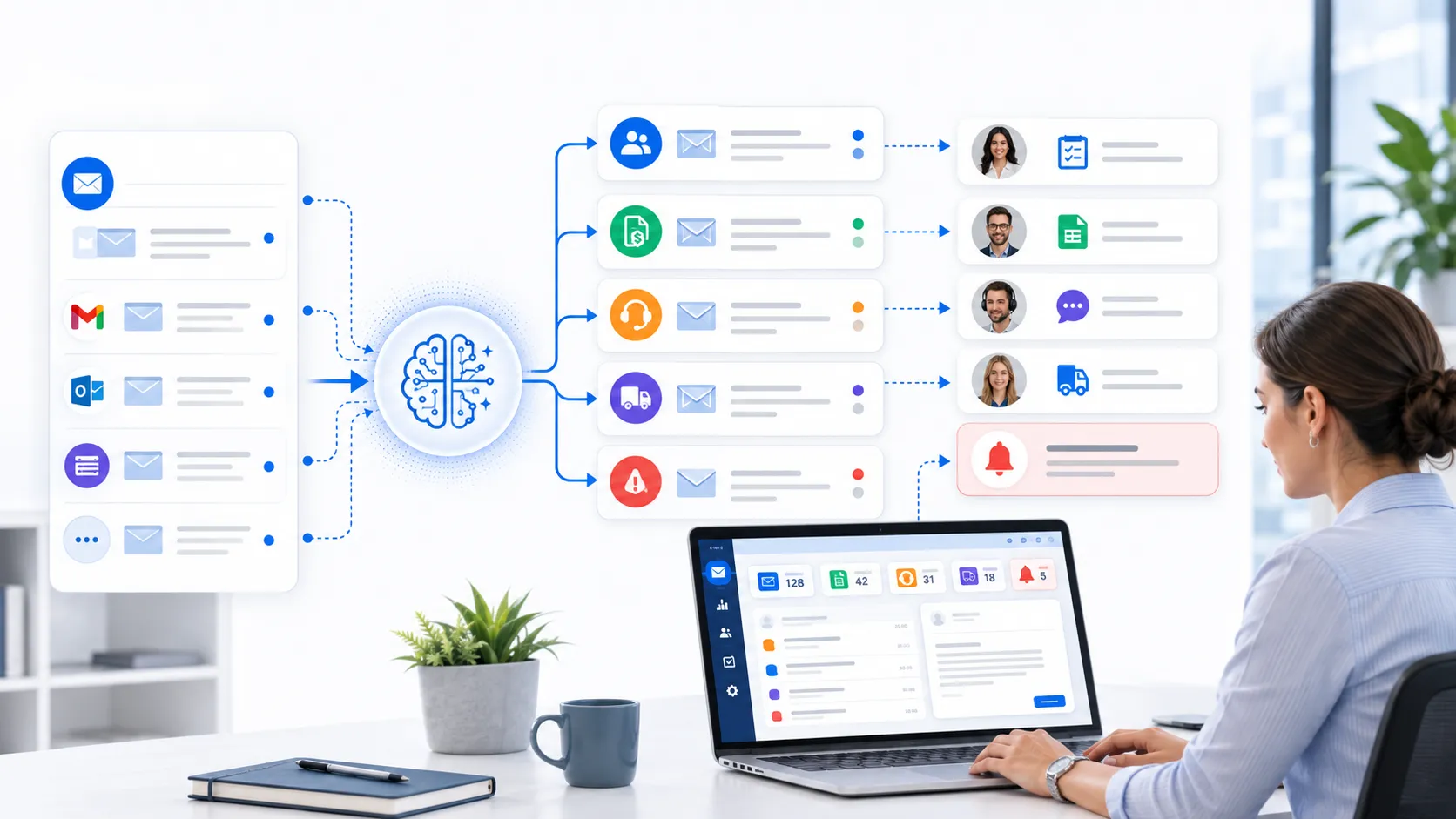
AI automation can help sort incoming emails and identify what needs attention.
For example:
New email → AI reads message → categorises email → extracts important information → creates task → sends notification.
Emails could be classified as:
- New enquiry
- Existing customer
- Supplier
- Invoice
- Support request
- Urgent issue
- General enquiry
The AI could also prepare a draft response for staff to review.
This does not mean every email should be automatically answered.
For important customer or financial communications, a human should remain in control.
4. AI Document Processing
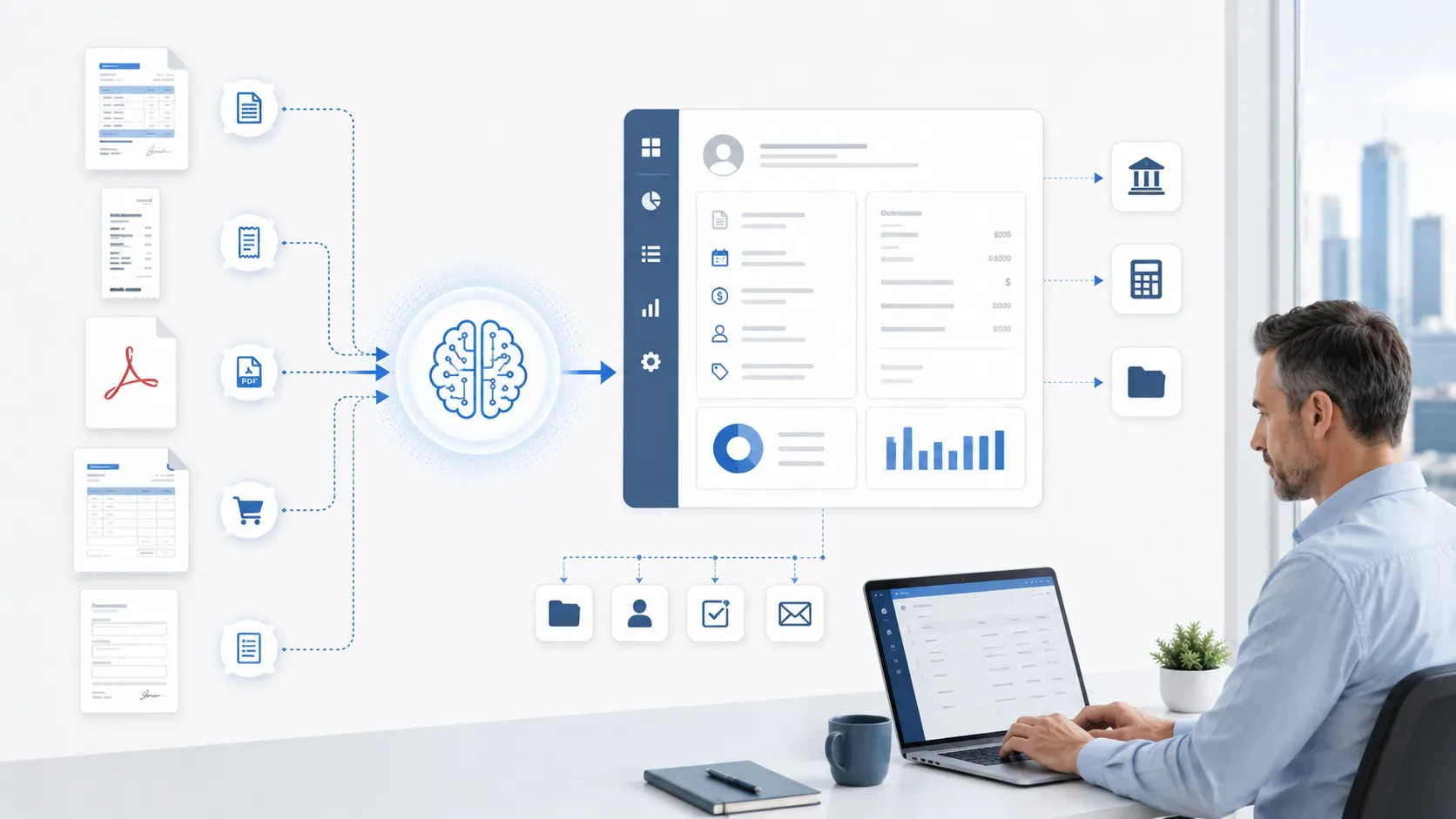
Australian businesses still spend many hours working with PDFs, invoices, forms and other documents.
AI can extract information from documents and send it into another system.
For example:
Invoice received → AI reads invoice → extracts supplier, invoice number and amount → sends information to accounting system → alerts staff if something needs checking.
The same approach can be used for:
- Quotes
- Purchase orders
- Customer forms
- Contracts
- Applications
- Receipts
- Delivery documents
This can reduce manual data entry and make information easier to find.
AI automation is no longer something only large companies can afford.
Australian small and medium businesses are increasingly using AI to handle everyday tasks such as customer enquiries, marketing, data entry, reporting and lead follow-up. In fact, recent Australian data shows that 43% of SMEs reported some level of AI adoption between December 2025 and February 2026.
But the biggest opportunity is not simply using ChatGPT or another AI tool.
The real opportunity is connecting AI to your existing business processes so that repetitive work happens automatically.
For example:
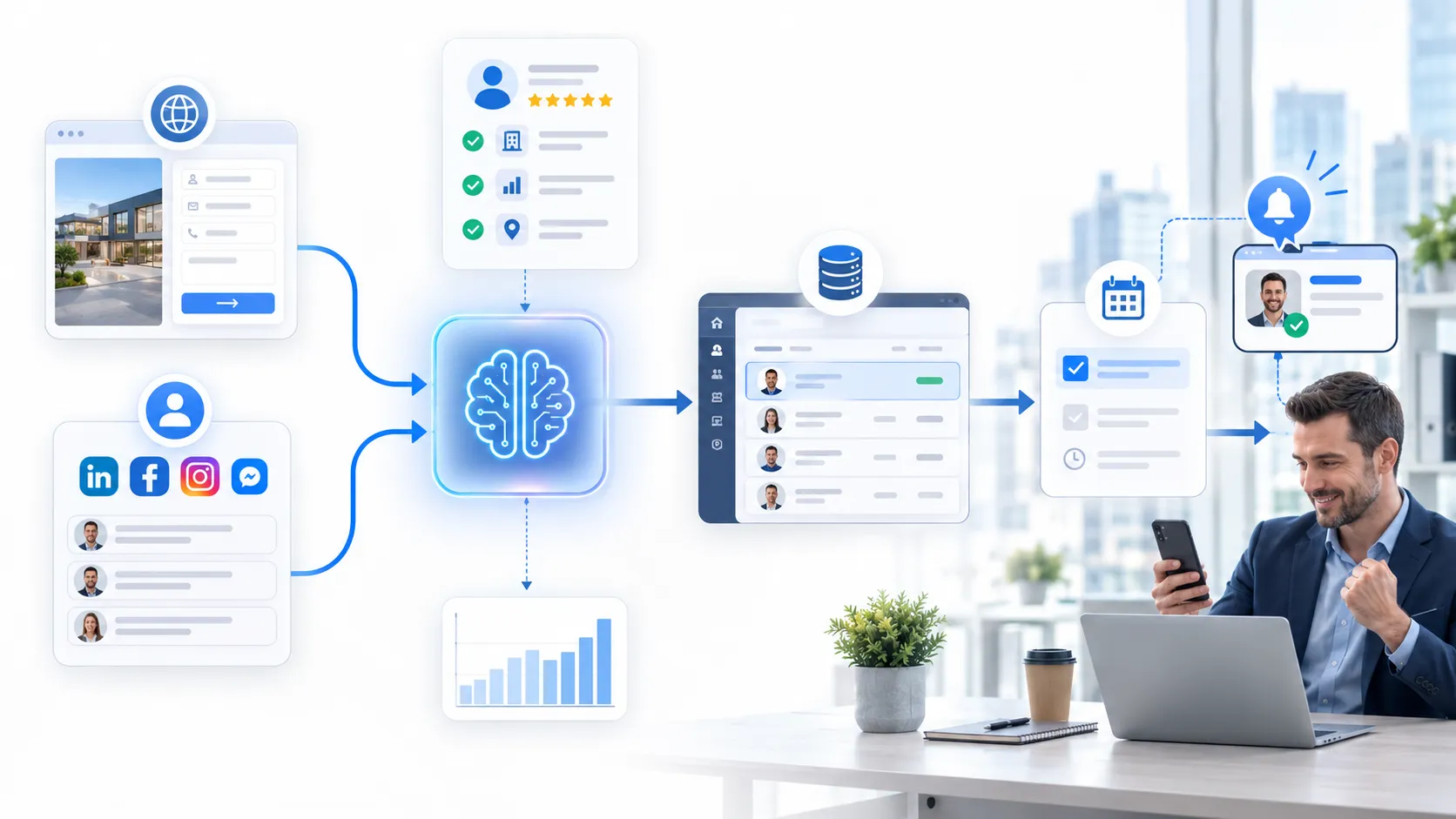
New enquiry
→ AI reads the enquiry → CRM is updated
→ customer receives a reply → salesperson is notified
→ follow-up is scheduled.
That is AI automation.
Here are 10 practical AI automations Australian businesses should consider in 2026.
1. AI Lead Capture and Follow-Up
Many businesses lose potential customers because leads are not followed up quickly enough.
A lead might arrive through:
- Website forms
- Facebook or Instagram
- Google Ads
- Phone enquiries
- Landing pages
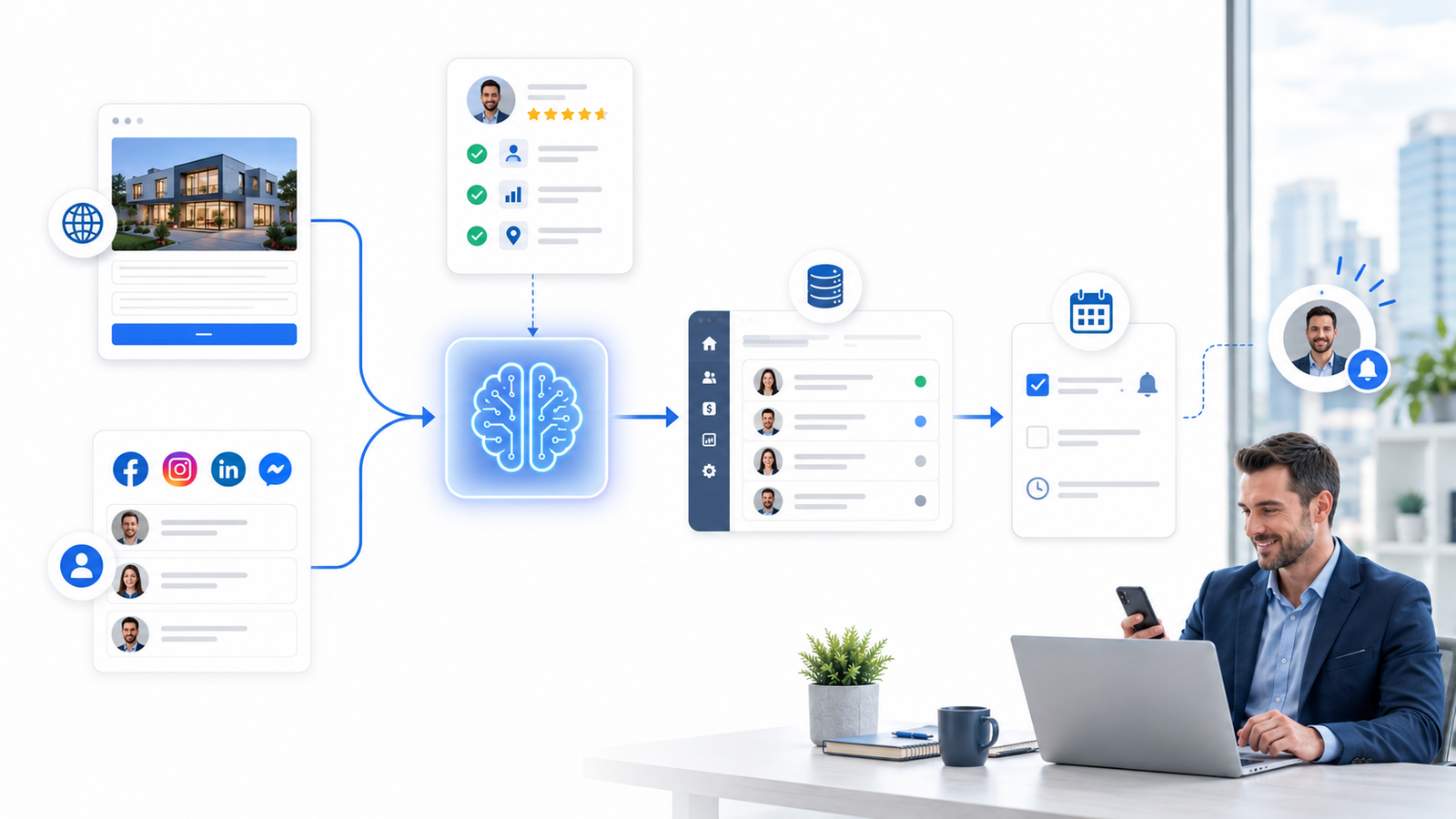
Instead of manually checking every source, an automation can collect the lead and send it directly to your CRM.
AI can then:
- Read the enquiry
- Identify what the customer wants
- Categorise the lead
- Assign a priority
- Add information to the CRM
- Send an initial response
- Notify the appropriate salesperson
- Create a follow-up task
Example
A Brisbane building company receives a website enquiry about a kitchen renovation.
The automation could identify the service requested, save the customer's information in the CRM and notify the sales team immediately.
The salesperson can then focus on the actual conversation instead of entering data.
Best for: Trades, agencies, professional services, real estate, finance and other businesses that depend on enquiries.
2. AI Customer Enquiry Automation
Australian businesses receive many repetitive questions every day.
Customers may ask:
- What are your opening hours?
- How much does this service cost?
- Do you service my area?
- How long does delivery take?
- How can I book?
- What is your cancellation policy?
An AI chatbot can answer common questions immediately.
More importantly, it can be connected to your business systems.
For example:
Customer question → AI identifies request → checks approved information → answers customer → sends complex questions to staff.
This means employees do not have to answer the same basic questions repeatedly.
However, businesses should make it clear when customers are interacting with an AI system and keep human oversight for situations where an automated answer could cause problems. Australian privacy guidance specifically highlights the importance of transparency and human oversight when using AI.
5. AI Appointment and Booking Automation
Businesses that depend on appointments can automate much of the booking process.
For example:
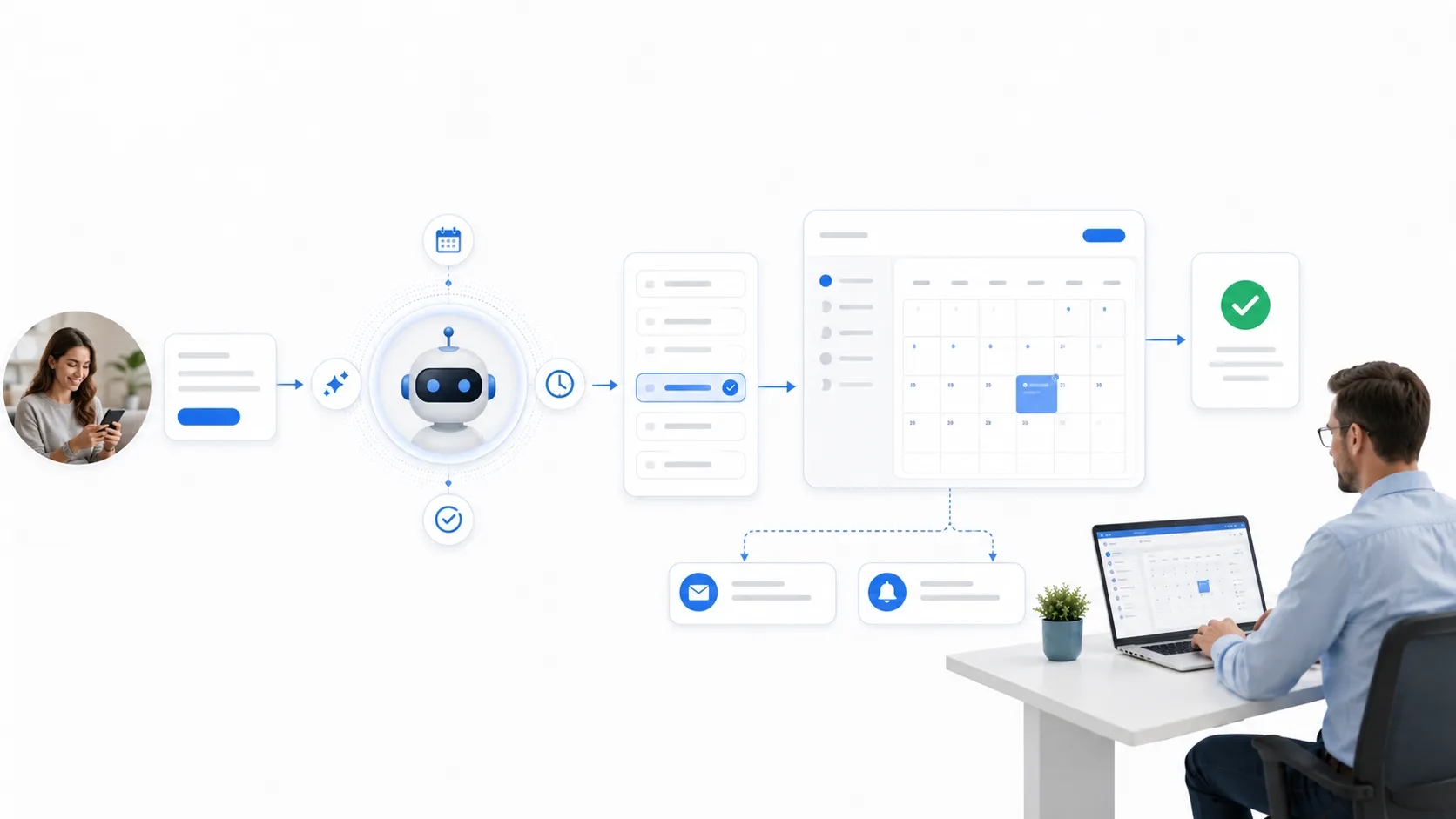
Customer enquiry → AI identifies requested service → checks available booking options → customer selects a time → booking is created → confirmation is sent.
This can be useful for:
- Clinics
- Salons
- Accountants
- Consultants
- Trades
- Agencies
- Training businesses
- Professional services
The automation can also send reminders before the appointment and follow up afterwards.
This reduces the amount of back-and-forth communication required from staff.
6. AI Marketing Content Automation
Content creation is one of the most common business uses of AI.
Australian businesses can use AI to help turn one piece of content into multiple marketing assets.
For example:
Blog article → AI creates social media posts → email newsletter → short video script → Google Business Profile update.
The important point is that AI should assist with the process rather than blindly publish everything it generates.
A human should check:
- Facts
- Brand voice
- Australian spelling
- Pricing
- Claims
- Legal or industry-specific information
This is particularly important for businesses operating in regulated or sensitive industries.
7. AI Sales Follow-Up
A potential customer may enquire today but not be ready to buy immediately.
Without a follow-up process, many of these leads disappear.
AI automation can help maintain contact.
For example:
New lead → salesperson contacts lead → CRM records conversation → AI identifies next action → follow-up reminder created → personalised email prepared.
The system can also identify leads that have not received a response.
For example:
“This lead has been waiting for a response for 2 days.”
That simple notification can prevent valuable opportunities from being forgotten.
8. AI Meeting Notes and Task Creation
Meetings often produce useful information, but someone still has to write the notes and create tasks afterwards.
AI can automate much of this work.
A meeting can be transcribed and summarised into:
- Main discussion points
- Customer requirements
- Decisions
- Questions
- Action items
- Deadlines
The automation can then send the tasks to the relevant project management or CRM system.
For example:
Meeting → AI transcript → summary → action items → project management system → team notification.
Instead of spending 20–30 minutes writing notes, employees can review the AI-generated summary and correct anything that needs changing.

9. AI Reporting and Business Dashboards
Many businesses have useful information stored across different systems.
For example:
- CRM
- Website analytics
- Advertising platforms
- Sales software
- Accounting software
- Customer support systems
The problem is that business owners often have to check several systems to understand what is happening.
Automation can bring important information together.
For example:
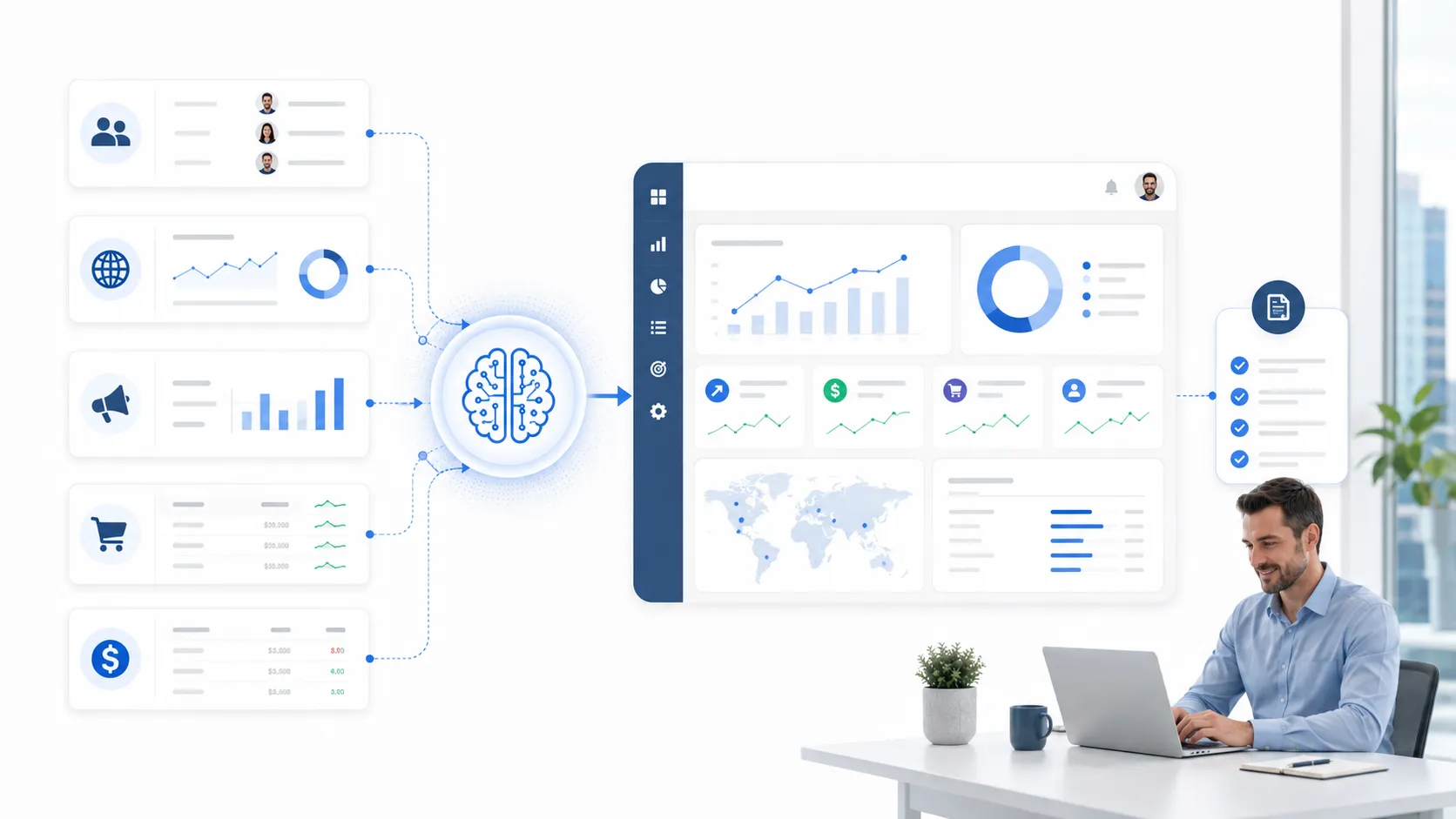
CRM + website + advertising data → automated reporting → AI analysis → dashboard → weekly business summary.
An AI-generated report could highlight:
- New leads
- Sales
- Conversion rates
- Advertising performance
- Unanswered enquiries
- Best-performing services
- Important changes
The goal is not to replace the business owner's judgement.
The goal is to make the important information easier to see.
10. AI Customer Review and Feedback Automation
Online reviews can strongly influence customer decisions.
Instead of manually checking reviews across different platforms, businesses can automate review monitoring.
A workflow could:
New review → AI analyses sentiment → identifies positive or negative feedback → notifies staff → prepares a response for approval.
For example, if several customers mention slow response times, the business can identify the problem and improve the process.
Positive feedback can also be turned into useful marketing insights.
The important rule is simple: AI should help manage feedback, not manipulate it.
Businesses should never use automation to create fake reviews or misleading customer experiences.
What Should Australian Businesses Automate First?
You do not need to automate everything at once.
A better approach is to start with one repetitive process.
Look for tasks that are:
- Repeated every day
- Time-consuming
- Based on clear rules
- Prone to human error
- Easy to measure
For example:
| Business Problem | Possible AI Automation |
|---|---|
| Leads are not followed up | AI lead follow-up |
| Staff answer the same questions | AI chatbot |
| Too many emails | AI email classification |
| Manual data entry | AI document processing |
| Missed appointments | Booking automation |
| Content takes too long | AI content workflow |
| Leads go cold | Automated follow-up |
| Meetings create too much admin | AI meeting notes |
| Reports take hours | Automated AI reporting |
| Reviews are difficult to monitor | AI review monitoring |
AI Automation Does Not Mean Removing People
One of the biggest misconceptions about AI automation is that a business needs to replace employees.
For most small businesses, that is not the best starting point.
The better approach is to remove repetitive administrative work so employees can spend more time on customers, sales, problem-solving and important decisions.
For example:
Before automation:
Employee receives enquiry → copies information → opens CRM → enters details → sends email → creates reminder → tells salesperson.
After automation:
Enquiry arrives → AI processes information → CRM updated → response prepared → salesperson notified → follow-up created.
The employee still controls the important customer interaction.
The repetitive administration is reduced.
Be Careful With Customer Data
AI automation should not be implemented without considering privacy and security.
Australian businesses need to be particularly careful when AI systems handle personal information.
The Office of the Australian Information Commissioner states that privacy obligations can apply to personal information entered into AI systems and information generated by those systems. It also recommends due diligence when selecting AI products and cautions organisations against entering personal or sensitive information into publicly available generative AI tools.
Before implementing an AI workflow, ask:
- What information is being sent to the AI?
- Where is that information stored?
- Who can access it?
- Does the AI provider use the data for other purposes?
- Is human approval required?
- What happens if the AI makes a mistake?
Cyber security is also important. Australian Cyber Security Centre guidance highlights risks such as data leaks, unreliable or manipulated AI outputs and supply-chain vulnerabilities when small businesses use AI.
Start Small and Measure the Result
You do not need a complicated AI system to get started.
Choose one process.
For example:
“We receive around 30 enquiries every week and spend several hours entering and following up those leads.”
That is a good automation opportunity.
Build the workflow, measure the results and improve it.
Track metrics such as:
- Hours saved
- Response time
- Number of leads followed up
- Conversion rate
- Errors reduced
- Customer response time
Once one automation works, move to the next process.
Final Thoughts
AI automation is becoming more practical for Australian businesses in 2026.
The biggest opportunity is not simply buying an AI tool. It is finding repetitive work and connecting AI with the systems your business already uses.
For a small business, even a few hours saved every week can make a meaningful difference.
Start with one process, keep people involved where judgement is important, protect customer information and measure the result.
The best AI automation is not the most complicated one. It is the one that solves a real business problem.


