
The Ultimate Guide to Using SEO for Lead Generation and Business Growth
If your website is getting visitors but not generating inquiries or sales, it's time to rethink your SEO strategy.
Many businesses focus only on ranking higher in Google, believing that more traffic automatically means more customers. In reality, traffic alone doesn't grow a business. The real goal of Search Engine Optimization (SEO) is to attract people who are actively searching for your products or services and convert them into qualified leads.
In this guide, you'll learn how SEO helps generate high-quality leads, the strategies that work, and how to turn organic visitors into paying customers.
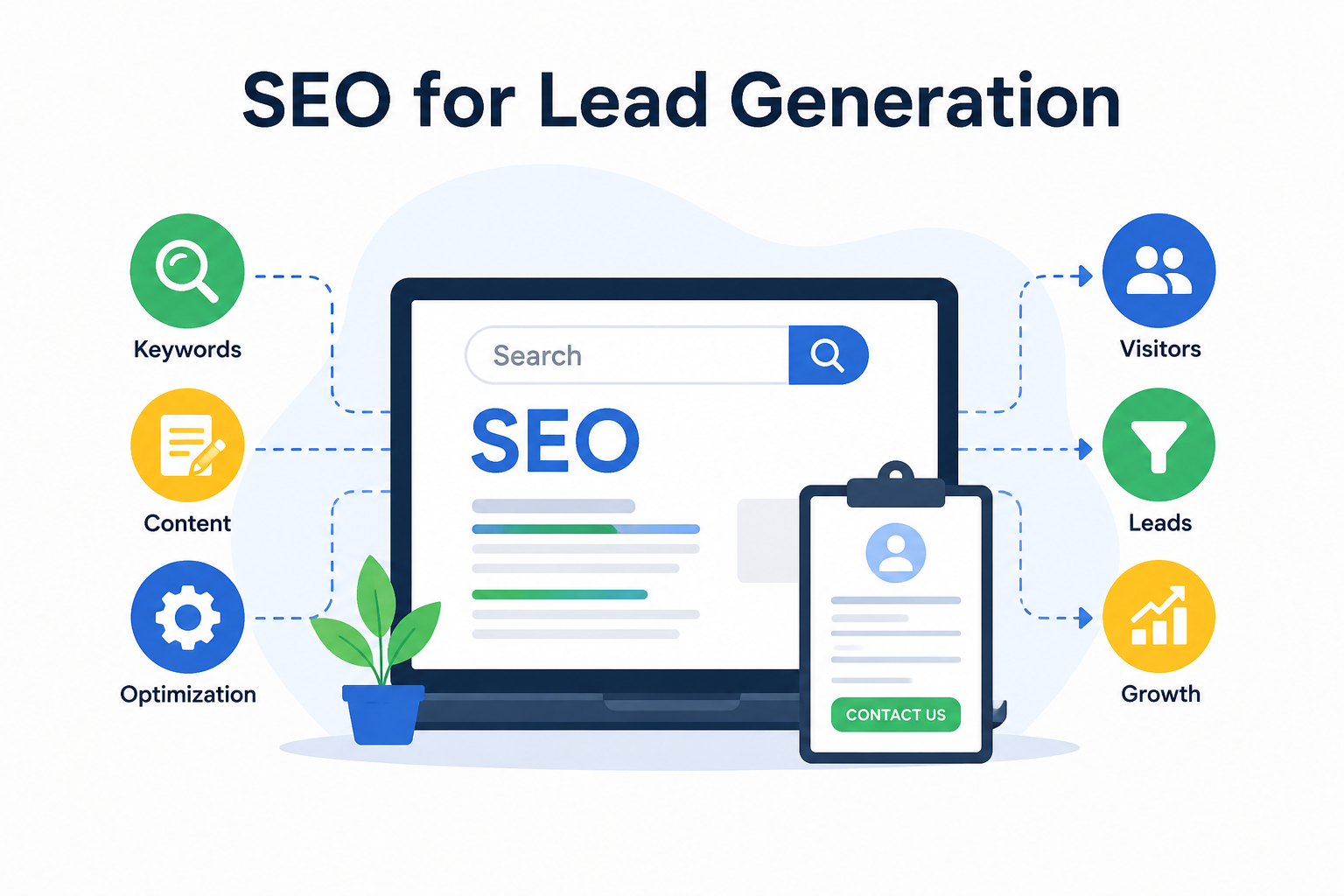
What Is SEO Lead Generation?
SEO lead generation is the process of attracting potential customers through search engines by optimizing your website for relevant keywords and user intent.
Instead of paying for every click through advertisements, SEO helps your website appear organically in Google search results. When users find your website while searching for solutions, they are already interested in what you offer, making them more likely to become customers.
Why SEO Is One of the Best Lead Generation Strategies
SEO provides long-term business growth by bringing in consistent, high-quality traffic without relying entirely on paid advertising.
Some key benefits include:
- Higher visibility on Google Search
- Better quality website traffic
- Increased brand credibility
- Lower customer acquisition cost
- Sustainable long-term lead generation
- Better return on marketing investment
Unlike paid ads that stop generating traffic once your budget runs out, SEO continues delivering results over time.
Step 1: Understand Search Intent
Not every keyword has the same value.
Focus on keywords that show buying intent rather than informational searches.
Examples of high-intent keywords include:
- SEO agency near me
- Best digital marketing company
- HVAC repair services
- AC installation company
- Ecommerce SEO services
- Local SEO expert
These searches usually indicate that users are ready to contact a business.
Step 2: Target the Right Keywords
Keyword research forms the foundation of every successful SEO campaign.
Look for keywords that have:
- High commercial intent
- Good monthly search volume
- Low to medium competition
- Local search opportunities
- Long-tail variations
Long-tail keywords often convert better because they match specific user needs.
For example:
Instead of targeting:
SEO
Target:
Affordable SEO services for small businesses
Step 3: Create High-Quality Content
Google rewards websites that provide valuable, informative, and trustworthy content.
Your content should answer common customer questions while naturally including your target keywords.
Some effective content ideas include:
- How-to guides
- Industry blogs
- Service pages
- Case studies
- FAQs
- Comparison articles
- Local business guides
Helpful content builds trust before visitors even contact your business.
Step 4: Optimize Your Website
Even great content won't rank if your website has technical issues.
Important SEO optimizations include:
- Fast loading speed
- Mobile-friendly design
- HTTPS security
- Clear page structure
- Optimized images
- Internal linking
- Schema markup
- SEO-friendly URLs
A technically optimized website improves both rankings and user experience.
Step 5: Optimize for Local SEO
If your business serves a specific location, local SEO is essential.
Make sure you:
- Optimize your Google Business Profile
- Collect customer reviews
- Use location-based keywords
- Create location landing pages
- Build consistent business citations
Local SEO helps your business appear in Google Maps and local search results where customers are ready to buy.
Step 6: Add Strong Calls-to-Action
Generating traffic isn't enough—you need to convert visitors into leads.
Every important page should include a clear call-to-action (CTA), such as:
- Get a Free Quote
- Schedule a Consultation
- Contact Our Team
- Request a Free SEO Audit
- Call Now
Reduce friction by keeping your contact forms simple and easy to complete.
Step 7: Build Trust with Social Proof
People trust businesses that demonstrate real results.
Add:
- Customer testimonials
- Client reviews
- Case studies
- Before-and-after results
- Industry certifications
- Awards and recognitions
Trust signals improve conversion rates significantly.
Step 8: Track SEO Performance
SEO is an ongoing process.
Monitor important metrics like:
- Organic traffic
- Keyword rankings
- Click-through rate (CTR)
- Conversion rate
- Form submissions
- Phone calls
- Bounce rate
Use tools such as Google Analytics and Google Search Console to measure performance and identify opportunities for improvement.
Common SEO Lead Generation Mistakes
Avoid these common mistakes:
- Targeting the wrong keywords
- Ignoring search intent
- Publishing low-quality content
- Poor website speed
- Weak internal linking
- No local SEO strategy
- Missing calls-to-action
- Not tracking conversions
Fixing these issues can dramatically improve your lead generation results.
Final Thoughts
SEO is much more than improving search rankings—it's about connecting your business with people who are actively looking for your products or services.
By targeting the right keywords, creating valuable content, optimizing your website, and continuously improving your strategy, SEO can become one of your most powerful and cost-effective lead generation channels.
Businesses that invest in SEO today build a steady stream of qualified leads, stronger brand authority, and sustainable long-term growth.
If your goal is consistent, high-quality leads without relying entirely on paid advertising, SEO should be a core part of your digital marketing strategy.


